Discover how to find long-term rental Ireland in our 2026 expat guide. Get tips on platforms, documentation, and market insights for success!
Finding a long-term rental in Ireland means using verified platforms, preparing your documentation in advance, and understanding local market conditions before you apply. A long-term lease in Ireland typically runs for six months or more, with the most competitive market sitting in Dublin, where one-bedroom flats regularly exceed €2,000 per month. Platforms like Daft.ie, Rent.ie, and MyHome.ie dominate the listings space, but knowing how to use them safely is what separates a successful application from a costly mistake. This guide covers everything you need to know to rent apartments in Ireland confidently, from your first search to signing a verified lease.
What are the best rental platforms for expats in ireland?
The three platforms that dominate Ireland's rental market are Daft.ie, MyHome.ie, and Rent.ie. Each aggregates thousands of listings across Dublin, Cork, Galway, and Limerick. Daft.ie holds the largest share of active listings and is the default starting point for most renters. MyHome.ie skews slightly towards properties managed by estate agents, which can add a layer of professional accountability. Rent.ie tends to feature more private landlord listings and is worth checking alongside the others.
All three platforms display a "Verified" tag on listings where the landlord has confirmed ownership or registered the tenancy with the Residential Tenancies Board (RTB). The RTB is Ireland's statutory body for regulating tenancies, and RTB registration is a legal requirement for landlords. Checking for that registration mark is one of the fastest ways to filter out fraudulent listings before you even pick up the phone.
Where these portals fall short is in serving expats who are unfamiliar with Irish neighbourhoods. Portals like Daft.ie are optimised for locals, which means they assume you already know whether Rathmines or Clontarf suits your commute. Newer tools that layer commute times, walkability scores, and area value metrics on top of standard listings give expats a genuine shortlisting advantage. Hauzed's rental search tools include these kinds of area insights, helping you avoid applying blindly to properties that look good on paper but are poorly located for your daily life.
Temas relacionados
#long-term rental options ireland expats#safest online rental marketplaces ireland#how rental platforms help expats ireland#best rental platforms expats ireland#long-term rental sites expats 2026#verified accommodation platforms ireland expats#relocation rental marketplace comparison ireland#find long-term rental ireland#how to rent in Ireland#move to Ireland rentals#long-term lease Ireland#long-term rentals Dublin#affordable rentals Ireland#best areas to rent Ireland#rental properties Ireland#find rentals in Ireland#renting apartments Ireland
Pro Tip:Set up saved search alerts on at least two platforms simultaneously. Dublin listings can receive dozens of enquiries within hours of going live, so email alerts give you a critical head start.
Use Daft.ie for volume and market coverage
Use MyHome.ie for agent-managed, professionally listed properties
Use Rent.ie for private landlord options
Filter by RTB registration status wherever the option exists
Cross-reference any listing address on Google Maps Street View before enquiring
What documents do you need before searching for rentals in ireland?
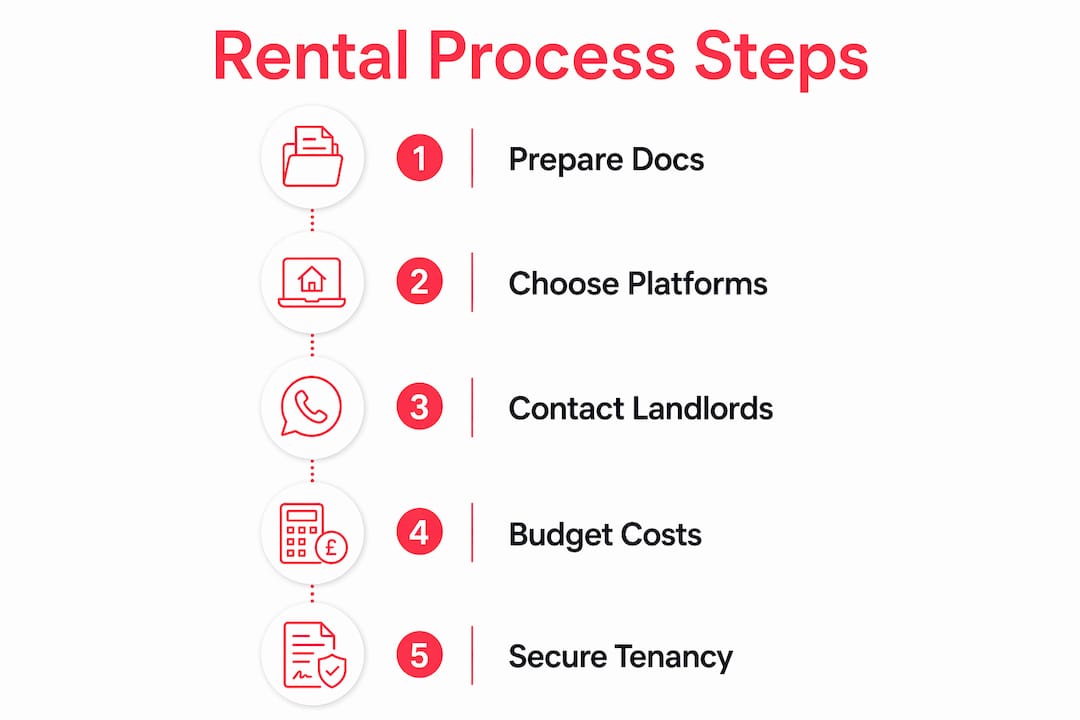
Success in Ireland's rental market relies on speed and organisation. Landlords receive multiple applications quickly, and the applicant who responds with a complete document pack on the same day almost always wins. Preparing your documents before you begin searching is not optional. It is the single biggest factor within your control.
Here is what your document pack should contain:
Passport or national ID scan — a clear, colour copy of your photo page
Employment contract or offer letter — confirming your role, salary, and start date
Three months of payslips — or bank statements if you are self-employed
Previous landlord reference — a written reference from your most recent landlord, ideally on headed paper
PPS number — Ireland's Personal Public Service number, required for tax and tenancy registration purposes
Proof of address — a utility bill or bank statement from your current address
Your PPS number is particularly worth sorting early. You will need it to register your tenancy with the RTB and for tax purposes if you claim rent tax credits. You can apply for a PPS number at your local Intreo office or online via MyGovID. The process takes a few days, so start it before you arrive if possible.
Store all of these documents in a single digital folder, accessible on your phone. Google Drive or Dropbox both work well. A centralised document vault with ID, employment proof, payslips, and landlord references is considered best practice by relocation specialists working in the Irish market.
Pro Tip:Pre-write a short, professional enquiry message that introduces you, states your move-in date, confirms your budget, and mentions that your documents are ready. Paste it into every enquiry form. Landlords notice applicants who are clearly prepared.
Budget for upfront liquidity before you begin. Total moving costs of €7,500–€11,000 are recommended, covering a security deposit of one month's rent, your first month's rent in advance, and a utilities buffer of approximately €200–€400 for service provider deposits when you have no Irish credit history.
How do you conduct a successful long-term rental search in ireland?
The Dublin rental market requires a search window of 4–6 weeks for most applicants. That figure is not pessimism. It reflects the reality of a market where demand consistently outpaces supply. Planning for this timeline protects you from making rushed decisions or falling for scams when you feel desperate.
Follow these steps to run a structured search:
Book short-term accommodation first. Serviced apartments, guesthouses, or verified short-term lets give you a local base. Attempting to secure rentals remotely dramatically increases scam risk, and 2–6 weeks of temporary accommodation is the safer approach.
Set your alerts and check listings daily. New properties appear throughout the day. Morning checks between 7am and 9am catch listings posted overnight.
Enquire the same day. Send your pre-written enquiry message within hours of a listing going live.
Request a viewing immediately. Offer flexibility on timing. Landlords prioritise applicants who can view quickly.
Verify the property in person or via live video call. Never accept a pre-recorded video tour as proof of legitimacy.
Submit your full document pack at the viewing. Do not wait to be asked.
Here is a comparison of the main search methods available to you:
Search Method
Pros
Cons
Major portals (Daft.ie, Rent.ie)
Largest listing volume, RTB filter available
High competition, limited area context for expats
Estate agents
Professional accountability, guided viewings
Fees possible, fewer private landlord options
Verified platforms (Hauzed)
ID-verified landlords, scam detection built in
Newer platform, growing listing base
Social media groups
Occasional off-market finds
High scam risk, no verification
Relocation agencies
Full support, local knowledge
Higher cost, less control over selection
The table makes one thing clear: verified platforms offer the strongest safety profile for expats who are unfamiliar with the market. You can explore Dublin's best rental districts to narrow your location before you even begin applying.
What do long-term rentals in ireland actually cost?
Rental costs vary significantly by city. Dublin sits at the top of the range, with one-bedroom flats frequently exceeding €2,000 per month. Cork, Galway, and Limerick offer rents roughly 20–30% lower, making them attractive options for remote workers or families who do not need to commute to Dublin daily.
City
Typical 1-Bed Monthly Rent
Typical 2-Bed Monthly Rent
Dublin
€2,300–€3,200
€2,800–€4,000
Cork
€1,600–€2,200
€2,000–€2,800
Galway
€1,500–€2,000
€1,900–€2,600
Limerick
€1,200–€1,700
€1,600–€2,200
For those who qualify, Cost Rental housing is worth investigating seriously. Cost Rental homes managed by Respond and Clúid offer rents approximately 25% below market rate, with long-term rolling contracts and security of tenure after six months. Eligibility is generally set at net household incomes below €66,000–€69,000 per year. These are high-quality builds with genuine long-term stability, not temporary social housing. You can read more about affordable rental programmes to understand whether you qualify.
The 2026 Residential Tenancies Act strengthens tenant protections further, enforcing a six-year minimum tenancy cycle and strict eviction controls requiring RTB oversight. This is significant. It means that once you secure a verified long-term lease, your position as a tenant is considerably more secure than it was even two years ago.
How do you avoid rental scams in ireland?
Rental fraud is a real and growing problem in Ireland, particularly for expats searching remotely. The most common scam involves a fraudster posting a property at an attractive price, collecting a deposit, and disappearing before any viewing takes place. Protecting yourself requires a few non-negotiable rules.
Never pay a deposit before viewing the property in person or via a live, interactive video call with the landlord present
Check RTB registration by asking the landlord for their RTB registration number and verifying it at rtb.ie
Use platforms with ownership verification rather than unmoderated listing boards
Reject any offer that pressures you to pay quickly or claims the landlord is abroad and cannot meet in person
Avoid wire transfers and cryptocurrency payments for deposits under any circumstances
Rent deposits are legally capped at one month's rent. Always obtain a dated receipt.
"If a listing looks significantly cheaper than comparable properties in the same area, treat it as a red flag rather than a bargain. Scammers use below-market pricing deliberately to attract desperate renters."
Pro Tip:If you are relocating from abroad, consider using a licensed relocation agency or a verified rental platform as an intermediary for your first Irish tenancy. The added cost is far less than losing a deposit to fraud.
Key takeaways
The safest and most effective way to find a long-term rental in Ireland is to use verified platforms, prepare your documents before you search, and never pay a deposit without a confirmed viewing.
Point
Details
Use verified platforms
Daft.ie, Rent.ie, MyHome.ie, and Hauzed all offer RTB-checked or verified listings.
Prepare documents in advance
A complete pack with ID, payslips, and references wins applications in competitive markets.
Budget for upfront costs
Expect €7,500–€11,000 to cover deposit, first month's rent, and utility buffers.
Allow 4–6 weeks to search
Dublin's market is competitive; rushing increases scam risk and poor decision-making.
Know your legal protections
The 2026 Residential Tenancies Act gives tenants a six-year minimum tenancy cycle.
What i have learned about renting in ireland as an expat
The single biggest mistake I see expats make is trying to secure a flat from abroad before they arrive. The logic feels sound: get it sorted before you land, avoid the stress of searching while living out of a suitcase. But the Irish rental market does not reward remote applicants. It rewards the person who can view a property at 48 hours' notice and hand over a complete document pack on the spot.
My honest advice is to book a serviced apartment or a verified short-term let for your first four weeks. Use that time to view properties in person, get a feel for different neighbourhoods, and build a sense of what your budget actually buys in each area. Dublin's districts vary enormously in character and commute times, and no amount of online research replaces walking the streets yourself.
I have also seen too many people underestimate the importance of Cost Rental schemes. If your household income falls below the threshold, Respond and Clúid properties offer genuine long-term stability at prices that make a real difference to your monthly finances. Most expats do not even know these options exist.
Finally, do not let the competitiveness of the market push you into a bad decision. A scam or a poorly verified tenancy costs far more in time, money, and stress than an extra two weeks in temporary accommodation. Take the time. Do it properly.
— Neifi
How Hauzed makes safe renting in ireland simpler
Ireland's rental market is competitive, but it does not have to feel overwhelming. Hauzed is built specifically for renters who want verified listings, scam-free applications, and a search experience that actually works in a fast-moving market.
Every landlord and tenant on Hauzed goes through secure ID verification. Listings are actively moderated, and AI-driven scam detection flags suspicious activity before it reaches you. Smart filters let you search by commute time, budget, and property type, so you spend less time scrolling and more time viewing properties that genuinely fit your needs. Whether you are looking for a multi-week let while you search or a verified long-term lease, Hauzed has options across Dublin and beyond. Check the available pricing plans to find the level of access that suits your search.
FAQ
What is a long-term rental in ireland?
A long-term rental in Ireland is a tenancy lasting six months or more, governed by the Residential Tenancies Act. Most long-term leases begin as fixed-term contracts and convert to rolling Part 4 tenancies after six months.
Which platforms are safest for finding rentals in ireland?
Daft.ie, Rent.ie, MyHome.ie, and Hauzed are the most widely used and safest platforms. Look for listings with RTB registration numbers and verified landlord badges to reduce scam risk.
How much should i budget for a long-term rental in dublin?
Budget at least €2,300–€3,200 per month for a one-bedroom flat in Dublin, plus upfront costs of €7,500–€11,000 covering your deposit, first month's rent, and utility buffers.
Can i find a rental in ireland before i arrive?
Securing a verified tenancy remotely is high-risk and strongly discouraged. Booking short-term accommodation for 2–6 weeks on arrival gives you a safe base to view properties in person and apply with confidence.
What is cost rental housing in ireland?
Cost Rental is a government-backed scheme offering rents approximately 25% below market rate, managed by approved housing bodies like Respond and Clúid. Eligibility is typically set at net household incomes below €66,000–€69,000 per year.