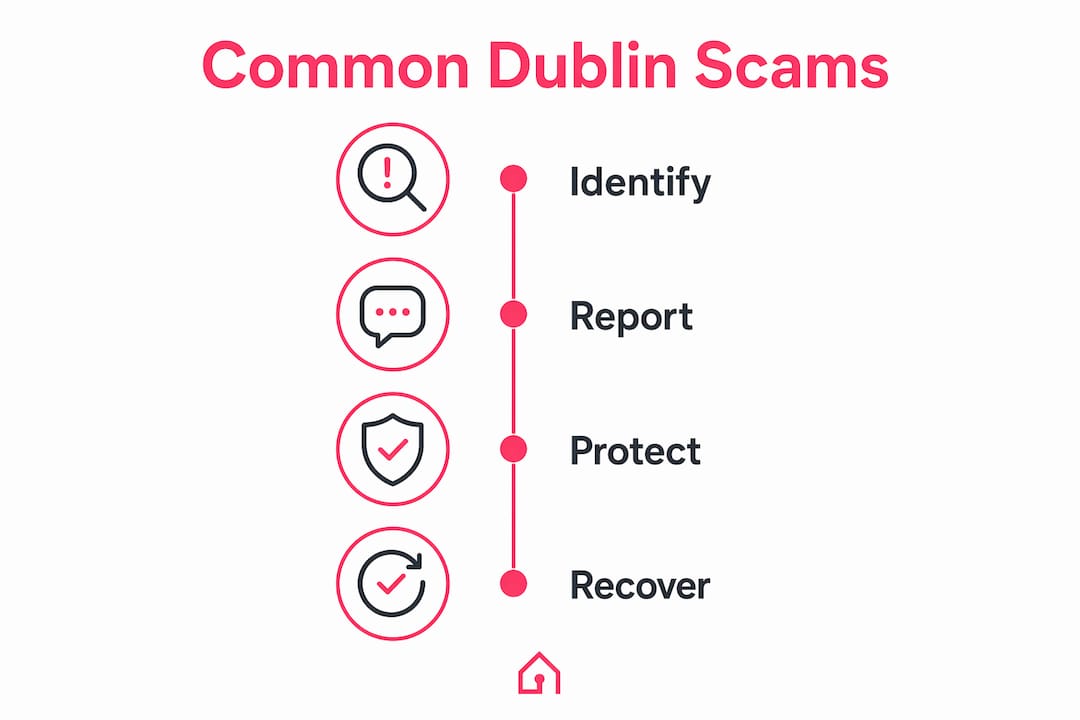
If you got scammed in Dublin, act fast! Follow essential steps to protect yourself, preserve evidence, and report the fraud. Learn more now.
Rental fraud is the fastest-growing scam category hitting Dublin residents and renters in 2026. If you've got scammed in Dublin, the CCPC advises you must document all evidence, stop communication immediately, and report to An Garda Síochána and the Competition and Consumer Protection Commission (CCPC) without delay. Acting fast limits the financial damage and builds the evidence trail that banks and law enforcement need. This guide walks you through every step, from the moment you realise something is wrong to protecting your accounts and understanding your legal rights under the Digital Services Act.
What to do if you've got scammed in Dublin
The first 24 hours after a scam are the most critical. Your priority is to preserve evidence before anything is deleted or overwritten.
Follow these steps in order:
Stop all contact. Block the scammer's number, email, and any social media accounts immediately. Continuing to engage gives them more opportunity to extract information or money.
Document everything. Save screenshots of messages, emails, listings, and payment confirmations. Note dates, times, and any phone numbers involved. For rental scams, keep records of the deposit amount, the property address, and any viewing arrangements.
Report to An Garda Síochána. Visit your local Garda station or contact the Garda National Economic Crime Bureau (GNECB), which handles financial fraud. Bring all your documented evidence. A formal report creates an official record, which your bank will ask for.
Contact the CCPC. The CCPC helpline provides consumer rights advice and can guide you on next steps, including chargeback options. The CCPC frames reporting as harm-limiting and evidence-building, even when full money recovery is unlikely.
Report to the platform. If the scam originated through an online listing or ad, report it to the platform directly. Under the Digital Services Act, platforms must act quickly on reports of illegal content.
Contact your bank. Call your bank or card provider straight away to flag the transaction and ask about reversal or chargeback options.
Pro Tip:Screenshot the scam listing before reporting it to the platform. Platforms often remove content quickly once flagged, and you will need that evidence for your Garda report and bank dispute.
Related Topics
#student accommodation scams Ireland#how to rent a room without getting scammed#got scammed in dublin#scam alert Dublin#how to avoid scams in Dublin#scam incidents in Dublin#Dublin scam reports#victims of scams in Dublin
Related Articles
Reporting scams builds a pattern that helps Gardaí and the CCPC identify repeat offenders. Even if your money is not recovered, your report may prevent the next person from losing theirs.
Common scam incidents in Dublin and how to spot them
Dublin has a distinct set of scams that target both residents and visitors. Knowing what they look like is your best defence.
Scam type
Common tactic
Prevention tip
Rental deposit fraud
Fake listings request upfront deposits to secure viewings
Never pay to view a property. Legitimate landlords do not charge viewing fees.
Fake ticket sites
Fraudulent sites mimic official venues via paid Google ads
Buy only from the official operator site. For Kilmainham Gaol, that is kilmainhamgaolmuseum.ie.
Card overcharging
Customers verbally told one price, charged more at terminal
Read the terminal display before you tap or insert your card.
Bogus callers
Fake tradespeople or officials knock unannounced
Ask for ID, check credentials, and report suspicious callers to Gardaí with vehicle details.
Phone banking scams
Caller claims to be from your bank and requests account details
Hang up and call your bank directly using the number on the back of your card.
Rental fraud: the most targeted scam in Dublin
Rental fraudsters manipulate trust by creating fake viewing appointments, making a deposit request the clearest warning sign for prospective tenants. AIB has warned that paying a deposit to secure a viewing is a red flag. The scammer then calls the victim asking for online banking details, claiming the deposit needs to be "processed." Students and expats searching for affordable Dublin rentals are particularly vulnerable because competition for properties is fierce and the pressure to act fast is real.
Fake ticket scams targeting visitors
Dozens of visitors to Kilmainham Gaol have lost money to fraudulent ticket sites that appear at the top of Google search results via paid ads. The Office of Public Works (OPW) states that official tickets are sold only through kilmainhamgaolmuseum.ie. Paid ads can look identical to official listings and are frequently renewed even after platforms take them down. The authoritative test is always the official operator domain, not the ad position.
In-person card overcharging
Bank of Ireland's fraud team has warned customers to check terminal amounts before authorising payments, after cases where customers verbally told €30 were charged €300. This scam thrives in busy environments like markets, tourist areas, and busy bars. The fix is simple: always read the screen before you tap.
Gardaí have also warned Dublin residents about bogus callers and rogue traders who use intimidation tactics, particularly targeting elderly or vulnerable people. If someone arrives unannounced offering services or claiming to be from a utility company, do not let them in. Note their description and any vehicle registration and report it.
What to do after reporting: protecting your finances
Reporting the scam is step one. Protecting your accounts is step two, and it needs to happen on the same day.
Contact your bank immediately. Ask about chargeback options for card payments. Evidence quality matters for chargeback claims, so provide terminal receipts, screenshots, and your Garda report reference number.
Cancel or replace your card. If you shared card details or noticed suspicious activity, request a replacement card straight away.
Change your passwords. Update passwords on your email, banking apps, and any accounts linked to the scam. Use a unique password for each account.
Enable two-factor authentication. Add two-factor authentication to your email and banking apps. This stops scammers from accessing accounts even if they have your password.
Monitor your statements. Check your bank statements daily for at least two weeks after the incident. Look for small test transactions, which scammers often use before making larger withdrawals.
Run a security check. If you clicked a suspicious link, run a security scan on your phone or computer using reputable software. Malware can capture passwords and banking details silently.
Do not engage with follow-up calls. Scammers sometimes call victims again, posing as bank fraud teams. Hang up and call your bank directly using the number printed on the back of your card.
Pro Tip:Keep a dedicated folder on your phone or computer for all scam-related evidence. Label it with the date and scam type. Banks and Gardaí process claims faster when evidence is organised and complete.
If you are an expat searching for rentals, verified Dublin listings on trusted platforms reduce the risk of encountering fraudulent properties in the first place.
How Dublin's legal framework protects scam victims
Dublin residents have more legal protection against online scams than many realise. The Digital Services Act (DSA) gives you formal rights when a scam originates through an online platform.
Protection
What it covers
Who enforces it
Digital Services Act
Platforms must remove illegal or misleading ads promptly after a report
Coimisiún na Meán (Ireland's media regulator)
Consumer rights law
Right to chargeback on card payments for goods or services not received
CCPC and your bank or card provider
Official operator status
Only licensed operators can sell tickets for OPW venues
OPW; verified via official domain
Garda National Economic Crime Bureau
Investigates financial fraud and cybercrime
An Garda Síochána
If you report a scam to an online platform and the illegal content is not removed promptly, you can escalate your complaint to Coimisiún na Meán or the CCPC under the DSA. This escalation route is underused by victims of scams in Dublin, but it carries real weight. Platforms face regulatory consequences for failing to act.
For ticket purchases, the legal position is clear. The OPW states that only tickets bought through the official site are valid. Third-party sites have no legal standing to sell OPW venue tickets. Fake ticket sites exploit paid search ads with official-looking branding, so verifying the domain before purchasing is the only reliable check.
Bookmark official websites for venues, government services, and utility providers before you need them. Searching in the moment, especially under time pressure, is exactly when scammers catch people out.
Key takeaways
Victims of scams in Dublin who act within the first 24 hours, document evidence thoroughly, and report to both An Garda Síochána and the CCPC give themselves the best chance of financial recovery and help prevent others from being targeted.
Point
Details
Act immediately
Document evidence, stop contact, and report to Gardaí and the CCPC on the same day.
Never pay to view a property
Upfront viewing deposits are the primary red flag for rental fraud in Dublin.
Check the terminal before you tap
Card overcharging scams rely on you not reading the screen before authorising payment.
Use official domains only
For tickets and government services, verify the exact domain before entering payment details.
Escalate if platforms do not act
Under the Digital Services Act, you can escalate unresolved scam reports to Coimisiún na Meán.
What we've learned watching Dublin's scam problem up close
At Hauzed, we see the consequences of rental fraud regularly. Renters arrive having paid deposits to people they never met, for properties that do not exist. The pattern is almost always the same: a listing priced slightly below market rate, a landlord who cannot do viewings in person, and a request for a deposit to "secure your spot."
The uncomfortable truth is that scammers are not getting more sophisticated. They are getting faster. They know that Dublin's rental market is competitive and that renters feel pressure to act before someone else takes the property. That pressure is the weapon. Slowing down for 10 minutes to verify a listing, check a landlord's identity, or confirm a bank account is legitimate breaks the scam every time.
Sharing your experience matters more than most people realise. When you report a scam to Gardaí, the CCPC, or a platform, you add to a pattern that investigators use to identify and shut down repeat offenders. One report feels small. A hundred reports from victims of scams in Dublin builds a case.
The best scam prevention is community awareness. Talk to friends, family, and colleagues about what you encountered. The more people recognise the tactics, the harder those tactics become to use.
— Hauzed
Hauzed: verified rentals with scam protection built in
Rental fraud in Dublin is a real and growing problem, but it is not inevitable. Hauzed was built specifically to remove the risk from the rental search process.
Every listing on Hauzed goes through active moderation and AI-driven scam detection before it reaches renters. Landlords and tenants are verified through secure ID checks, so you know exactly who you are dealing with before any money changes hands. There are no viewing fees, no pressure tactics, and no unverified listings. Whether you are a student, an expat, or a long-term renter, Hauzed gives you a safe place to search without the anxiety that comes with unverified platforms. Safe renting in Dublin starts with knowing the listing is real.
FAQ
What should I do first if I've been scammed in Dublin?
Stop all contact with the scammer immediately, then document every piece of evidence including messages, receipts, and screenshots. Report to An Garda Síochána and the CCPC on the same day.
Is it worth reporting a scam if I cannot get my money back?
Yes. The CCPC states that reporting builds evidence for law enforcement and improves the chances of financial remediation through your bank, even when direct recovery is unlikely.
How do I avoid rental scams in Dublin?
Never pay a deposit to secure a viewing. Legitimate landlords do not charge viewing fees. Use verified platforms and confirm the landlord's identity before transferring any money.
What is the Digital Services Act and how does it help scam victims?
The Digital Services Act requires online platforms to remove illegal or misleading ads promptly after a user report. If a platform does not act, you can escalate your complaint to Coimisiún na Meán or the CCPC.
How do I know if a ticket website is legitimate?
Check the exact domain against the official operator's website. For Kilmainham Gaol, only kilmainhamgaolmuseum.ie is valid. Paid ads can mimic official sites, so the domain is the only reliable check.