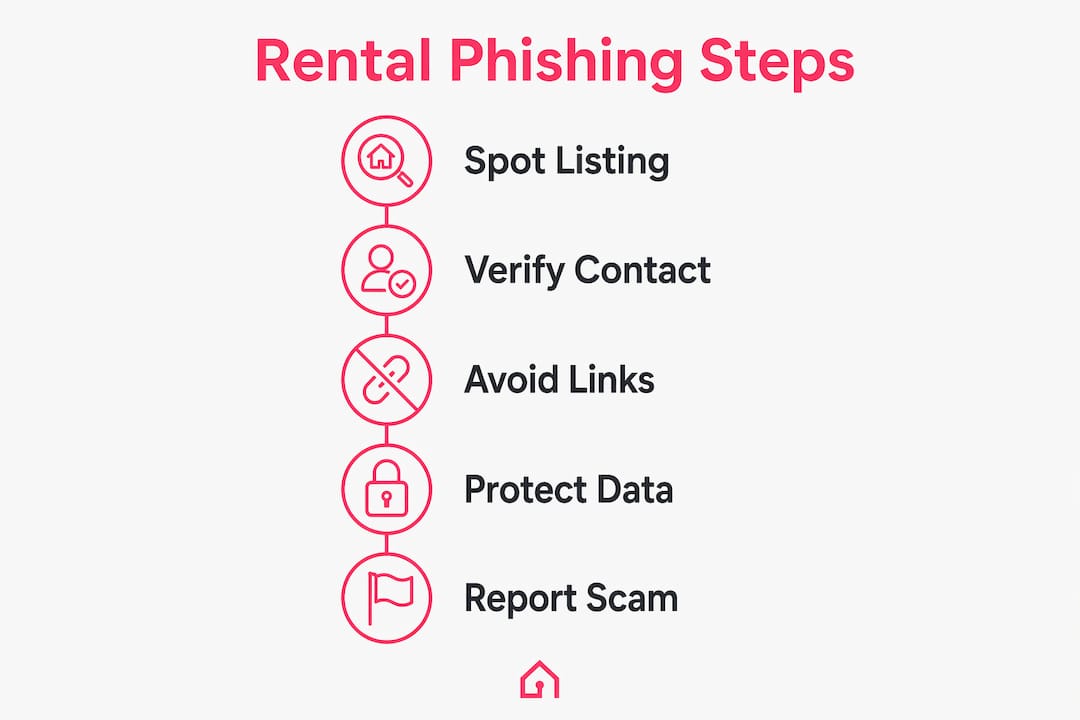
Learn what phishing in the rental market is and how to protect yourself from scams. Stay safe while searching for your next home!
Phishing in the rental market is when scammers impersonate legitimate landlords, agents, or rental platforms to trick you into handing over sensitive personal or financial information. The industry term for this broader category is rental fraud, and phishing is its most common digital form. Since 2020, nearly 65,000 rental scams have been reported in the United States alone, with around $65 million lost to victims. That figure almost certainly understates the true scale, since most scams go unreported. If you are searching for a rental in Dublin, across Ireland, or anywhere online, understanding how these scams work is the first and most protective step you can take.
What is phishing in the rental market?
Phishing in the rental market is a form of rental property fraud where criminals send messages designed to look like they come from a real landlord, letting agent, or rental platform. The goal is always the same: get you to click a link, open an attachment, or share information before you have had any chance to verify who you are actually dealing with. The FTC defines phishing as attempts to get recipients to click unexpected links or attachments, which can lead to identity theft through stolen details such as passport numbers or bank credentials.
What makes rental phishing particularly effective is the context. You are already expecting messages from strangers about properties. A message that looks like a landlord reply or a platform notification fits naturally into your inbox. Scammers exploit that expectation to lower your guard before you have had time to think.
Rental phishing targets two things above all: your personal identity data and your money. Both are available at the same moment in a rental search, when you are eager, under pressure, and communicating with people you have never met.
How do scammers execute phishing in the rental market?
Rental market scams follow a small number of well-worn patterns. Knowing them makes them far easier to spot.
Copied listings with altered contact details. Scammers copy real rental listings and change only the contact information or payment details. The photos, address, and description are genuine. The phone number or email belongs to the fraudster. You respond to what looks like a real property and end up in conversation with a criminal.
Temas relacionados
#what is phishing in rental market#protect against rental scams#rental market scams#rental property fraud#avoiding rental phishing#how to spot rental phishing#common rental phishing tactics#phishing scams in rentals#what to do if phished in rentals
Fake listings with below-market rents. Some scammers build listings from scratch, using attractive photos pulled from estate agent websites and pricing the property well below the local market rate. The low rent is the hook. Once you enquire, the pressure begins.
Phishing messages with malicious links. You receive an email or platform message that appears to come from a rental site, asking you to verify your account, confirm a booking, or download an application form. The link leads to a fake website designed to harvest your login credentials or personal details.
Requests for sensitive information too early. A legitimate landlord does not need your passport number, bank account details, or payslips before you have signed a lease or even viewed a property. Scammers ask for this information early, framing it as a standard requirement.
The channels scammers use include email, Facebook Marketplace, WhatsApp groups, and informal listing forums. Platforms with little or no identity verification are the most common hunting grounds, because anyone can post or message without accountability.
Pro Tip:If a message arrives with an unexpected link or asks you to download a form before you have spoken to anyone in person, stop. Contact the rental platform or landlord directly using contact details you find independently, not those in the message itself.
What are the warning signs of rental phishing scams?
Phishing scams in rentals share a consistent set of red flags. Recognising even one of them should prompt you to pause and verify before doing anything else.
Rent that seems too low. A two-bedroom flat in Dublin city centre priced significantly below the market rate is not a bargain. It is a lure.
Requests for payment before viewing. No legitimate landlord asks for a deposit or holding fee before you have seen the property in person or on a verified virtual tour.
Unusual payment methods.Wire transfers, gift cards, and cryptocurrency are the payment methods scammers prefer. The FTC treats these as equivalent to sending cash: once the money is gone, recovery is almost impossible.
Mismatched contact information. The email address in the listing does not match the domain of the agency named. The phone number has a different country code. These small inconsistencies signal that something has been altered.
Pressure to decide quickly. Scammers create urgency. "Three other people are viewing tomorrow." "I need a decision by tonight." Legitimate landlords give you time to think.
Requests for sensitive data before a lease exists. Landlords need no sensitive personal information before a formal lease agreement is in place. Any request for your PPS number, passport scan, or bank details at the enquiry stage is a serious warning sign.
Grammar and formatting inconsistencies. Scam messages often contain odd phrasing, inconsistent formatting, or a tone that does not match the platform they claim to represent.
Trust your instincts. If something feels off, it probably is.
How to verify rental listings and landlord authenticity
Verification is your most reliable defence against rental property fraud. Visual cues alone cannot confirm legitimacy, because scammers copy real listings with enough accuracy to fool a casual glance. Independent checks are the only way to be certain.
Follow these steps before sharing any information or making any payment:
Search the address and owner name together online. The FTC recommends searching the rental address alongside the owner or rental company name. If the same property appears under different ownership or contact details on multiple sites, that is a clear sign of fraud.
Check the property on the official agency or landlord website. If the listing claims to come from a letting agency, find that agency's website independently and confirm the property appears there with the same contact details.
Verify email addresses and phone numbers separately. Do not use the contact details provided in the message. Find the landlord or agency through a search engine or official platform and contact them directly.
Insist on a viewing before any payment. A real landlord will always allow you to see the property, either in person or via a verified video call. Refusing a viewing is a definitive red flag.
Ask for a formal lease agreement before transferring any money. Review the rental agreement carefully and confirm it includes the landlord's full legal name, address, and registration details where applicable.
The table below summarises the key verification checks and what each one confirms:
Verification step
What it confirms
Address and owner name search
No duplicate listings with different ownership
Official agency website check
Listing and contact details are consistent
Independent contact verification
You are speaking to the real landlord or agent
In-person or verified virtual viewing
The property exists and is as described
Formal lease before payment
Legal relationship is established before money moves
Pro Tip:Only use contact details you find through an official platform or a search engine. Never call or email the number or address given in an unsolicited message, even if it looks legitimate.
Best practices for avoiding phishing during your rental search
Avoiding rental phishing comes down to a strict personal workflow. The FTC describes the safest rental process as a clear sequence: confirm the listing and owner first, view the property and sign the lease second, then proceed to payment. Skipping any step significantly increases your risk.
Never click links in unsolicited messages. If you receive an unexpected email or platform message with a link, do not click it. Go directly to the platform's website by typing the address into your browser.
Do not download attachments from unknown senders. Application forms, tenancy agreements, and ID verification requests sent as email attachments from unverified contacts are common phishing tools.
Use platforms with identity verification. Rental searches conducted through verified marketplaces reduce your exposure to anonymous scammers. Platforms like Hauzed require identity verification, which means both tenants and landlords are accountable.
Avoid wire transfers, gift cards, and cryptocurrency for any rental payment. Payment method is a key risk indicator. These methods offer no fraud protection and no route to recovery.
Keep records of all communications. Save every message, email, and receipt. If something goes wrong, these records support any report you make to authorities.
Report suspected phishing immediately. The FTC's ReportFraud portal accepts reports of rental scams and phishing attempts. In Ireland, you can report to An Garda Síochána or the Competition and Consumer Protection Commission.
If you believe you have already been phished, act quickly. Contact your bank to freeze any affected accounts. Change passwords for any accounts where you used the same credentials. Report the incident to the relevant authorities and to the platform where the scam occurred. The faster you act, the better your chances of limiting the damage.
Pro Tip:Treat any request for sensitive information before a lease is signed the same way you would treat a stranger asking for your bank card on the street. The context is different, but the risk is identical.
Key takeaways
Rental phishing is a form of identity and financial fraud that exploits the trust and urgency of the rental search process, and the most effective defence is a strict verification workflow before sharing any information or making any payment.
Point
Details
Phishing targets trust and urgency
Scammers use pressure and surprise to get quick clicks before you verify anything.
Copied listings are the most common tactic
Real photos and addresses are used with altered contact details to divert renters.
Payment method signals fraud risk
Wire transfers, gift cards, and cryptocurrency offer no fraud protection or recovery route.
Verification must come before payment
Confirm listing, owner, and view the property before any money changes hands.
Report scams to authorities
Use the FTC's ReportFraud portal or, in Ireland, An Garda Síochána and the CCPC.
Hauzed's view: why renters keep falling for the same traps
What strikes me most about rental phishing is not the sophistication of the scams. Most of them are not sophisticated at all. What makes them work is the emotional state of the person searching. When you have been looking for a flat in Dublin for six weeks, rejected from a dozen viewings, and watching rents rise, a message that says "property available, just send us your details" lands differently. You want it to be real. That desire is what scammers count on.
The renters who fall victim most often are not careless. They are tired and under pressure. They have been conditioned by a competitive market to respond quickly, because slow responses genuinely do cost you properties. Scammers have studied that behaviour and built their tactics around it.
The uncomfortable truth is that the fragmented, anonymous channels most renters use, such as Facebook groups, WhatsApp threads, and unverified listing sites, create the conditions where phishing thrives. When neither side of a rental transaction is verified, anyone can claim to be anyone. The solution is not to be more suspicious of every landlord. It is to use channels where verification is built into the process, so you can focus on finding a home rather than investigating every contact.
Patience is your most underrated protection. A real landlord will wait for you to verify. A scammer cannot afford to.
— Hauzed
Safer renting starts with the right platform
Rental phishing is harder to pull off when both sides of the transaction are verified. Hauzed is built around that principle. Tenants on Hauzed complete identity verification before interacting with landlords, and landlords publish verified listings through a structured workflow. That means you are not starting every conversation from zero trust.
If you are searching for a rental in Dublin or across Ireland, browse verified listings on Hauzed where the process is designed to reduce the risk of anonymous, scam-prone interactions from the start. For a broader look at how to protect yourself, the Hauzed guide to rental scams covers the full picture of what to watch for and how to stay safe throughout your search.
FAQ
What is phishing in the rental market?
Phishing in the rental market is when scammers impersonate landlords, agents, or rental platforms to steal your personal or financial information. They typically use fake listings, fraudulent emails, or malicious links to trick you into acting before you can verify their identity.
How do I spot a rental phishing scam?
The clearest signs are below-market rents, requests for payment before viewing, demands for wire transfers or gift cards, and pressure to decide quickly. Any request for sensitive personal data before a lease is signed is a serious red flag.
What should I do if I think I have been phished in a rental?
Contact your bank immediately to protect any affected accounts, change your passwords, and report the incident to the FTC's ReportFraud portal or, in Ireland, to An Garda Síochána and the Competition and Consumer Protection Commission.
Are wire transfers and gift cards really that risky for rental payments?
Yes. The FTC describes wire transfers, gift cards, and cryptocurrency as equivalent to sending cash. Once the payment is made, there is almost no route to recovery if the transaction turns out to be fraudulent.
How can verified rental platforms reduce phishing risk?
Platforms that require identity verification from both tenants and landlords remove the anonymity that phishing depends on. When both parties are accountable, scammers have far less room to operate undetected.