Discover essential rental rights for tenants in Ireland. Learn about new protections and how to confidently assert your rights starting in 2026.
Rental rights for tenants in Ireland are the legal protections that guarantee your right to stay in your home, limit how much your landlord can raise your rent, and set minimum standards for the property you live in. The Residential Tenancies Act, enforced by the Residential Tenancies Board (RTB), is the foundation of every tenant's legal position. From march 2026, new legislation introduced rolling 6-year tenancy cycles, national rent controls, and stronger eviction rules. Knowing these protections means you can act with confidence rather than anxiety when a landlord sends a notice or proposes a rent increase.
What are the rental rights tenants in Ireland hold under 2026 law?
Rental rights for tenants in Ireland cover three core areas: security of tenure, rent control, and property standards. The Residential Tenancies Act gives you these rights automatically. No lease clause can remove them. Citizens Information and the RTB both publish free guidance on every aspect of your tenancy, and the RTB's dispute resolution service is available at no cost to you.
The 2026 reforms replaced the patchwork of local Rent Pressure Zones with a single national framework. That change matters because it means standardised rent and tenancy regulations now apply whether you rent in Dublin, Cork, or a rural town. You no longer need to check whether your area qualifies for protection. The rules apply everywhere.
How does security of tenure protect tenants in Ireland?
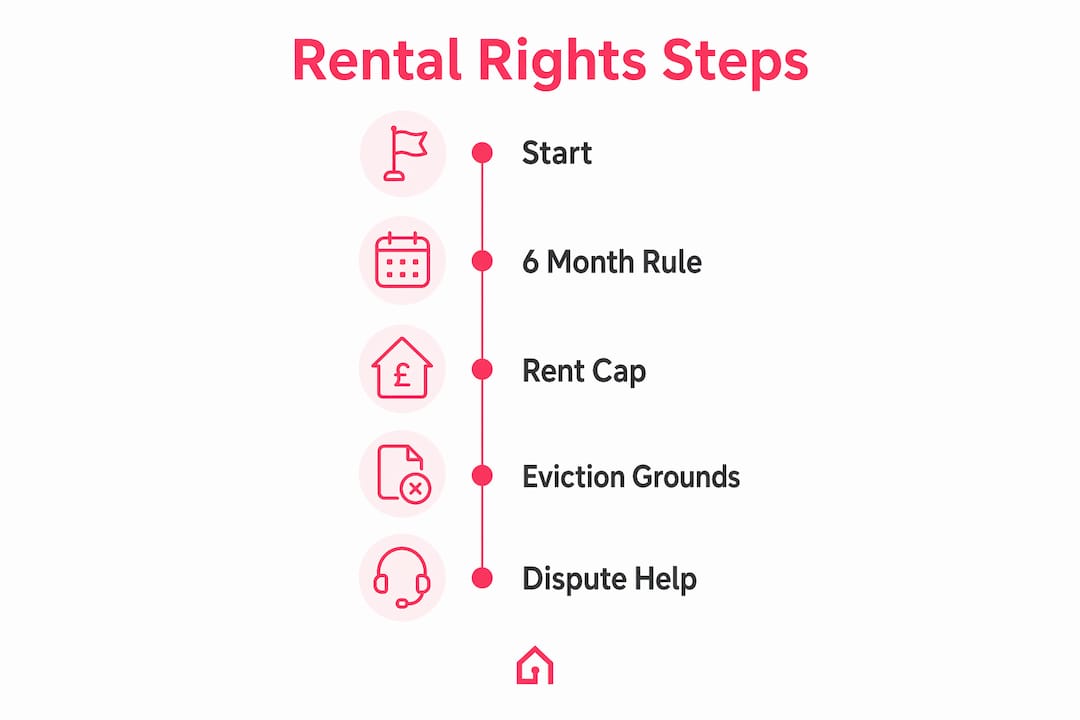
Security of tenure is your legal right to remain in a rented property without your landlord ending the tenancy without a valid reason. Under the Tenancies of Minimum Duration rules introduced on 1 march 2026, this right begins after just 6 months of continuous residence. Once you reach that threshold, your tenancy enters a rolling 6-year cycle and your landlord must have a legally defined reason to end it.
What counts as a valid ground for eviction?
The law sets out specific grounds a landlord can use to terminate a tenancy. These include:
The landlord intending to sell the property
Temas relacionados
#tenant rights ireland examples#Ireland tenancy regulations#Ireland rental legislation#rental agreements tenants Ireland#tenant dispute resolution Ireland#landlord obligations Ireland#rental rights tenants ireland#tenant eviction laws Ireland#tenant legal advice Ireland#renters' legal protections#lease agreements in Ireland#tenant rights in Ireland#housing rights for tenants#how to enforce rental rights
The landlord or an immediate family member needing to move in
The tenant breaching their obligations, such as not paying rent
The property requiring substantial refurbishment that cannot be done with a tenant in place
Landlords cannot end a tenancy simply because they want to. Each ground requires supporting evidence, and the RTB can scrutinise any notice of termination you receive.
Fixed-term leases and Part 4 rights
A fixed-term lease does not remove your security of tenure. Part 4 tenancy rights apply alongside any fixed-term agreement once you have lived in the property for 6 months. Near the end of a fixed term, you must notify your landlord of your intention to stay. If you miss that window, you may lose the automatic right to remain. Keep a note of your fixed-term end date and act before it arrives.
Small landlords (those with fewer than four properties) and large landlords operate under slightly different rules in some procedural areas, but the core security of tenure protections apply to all tenants regardless of portfolio size.
Pro Tip:Check your tenancy start date carefully. The 6-month clock starts from the day you moved in, not the date your lease was signed. If your landlord sends a termination notice before 6 months are up, the notice may still be valid, so timing matters.
For a detailed breakdown of how different agreement types interact with your rights, the Hauzed guide to tenancy agreements covers the key differences clearly.
What are the national rent control rules in Ireland?
National rent control caps annual rent increases at the lower of the Consumer Price Index (CPI) inflation rate or 2%. That means if inflation runs at 1.5%, your rent can only rise by 1.5%. If inflation hits 4%, your landlord is still limited to 2%. The annual rent increase cap applies to both private rentals and student tenancies.
This replaced the previous Rent Pressure Zone system, which only covered designated areas. The new national framework closes the gaps that previously left tenants in certain locations without meaningful protection.
When can a landlord reset rent to market rate?
A rent reset to market rate is only permitted in defined circumstances, such as when a property has been substantially renovated or when a new tenancy begins after a genuine gap. Even then, the landlord must justify market rent using the RTB's rent register, which records comparable rents for similar properties in the same area. You can check the register yourself before agreeing to any new rent level.
Scenario
Rent increase allowed?
Existing tenancy, annual review
Yes, capped at CPI or 2%, whichever is lower
New tenancy after genuine gap
Yes, reset to market rate permitted
Mid-tenancy increase without review date
No
Increase above cap attempted
No, challengeable via RTB
The 2026 laws specifically aim to end economic evictions driven by inflated rent resets. A landlord cannot price you out of your home through a rent increase and then claim you left voluntarily.
Pro Tip:Before accepting any rent increase, search the RTB rent register for your street or area. If the proposed figure sits well above comparable properties, you have grounds to challenge it through the RTB's dispute process.
What are a landlord's maintenance obligations?
Landlords must maintain rented properties to the minimum standards set by the Housing (Standards for Rented Houses) Regulations 2019. These are not optional guidelines. They are legal requirements, and your landlord can face enforcement action for failing to meet them.
The standards cover:
Structural condition of the property, including roof, walls, windows, and floors
Heating systems that can maintain an adequate temperature throughout the home
Sanitary facilities in good working order, including toilets, baths, and showers
Safe and functioning electrical and gas installations
Adequate ventilation and natural lighting in all habitable rooms
Secure and weatherproof windows and external doors
If your landlord fails to carry out repairs after you report them in writing, you have two routes. You can contact your local authority housing inspector, who has the power to issue improvement notices and take enforcement action. Alternatively, you can refer the matter to the RTB's dispute resolution service. Both routes are free.
Your own responsibilities matter too. You must report repair needs promptly and allow your landlord reasonable access to carry out work. Refusing access can weaken your position if a dispute arises later.
How do you manage your tenancy agreement, end a tenancy, and resolve disputes?
A tenancy agreement sets out the terms of your rental, but it cannot override your statutory rights. Any clause that attempts to waive your security of tenure or permit rent increases above the legal cap is unenforceable. Understanding what your lease can and cannot do is the first step to protecting yourself.
Ending a tenancy: notice periods and your obligations
If you want to leave, you must give your landlord written notice. The required period depends on how long you have lived there. Landlords ending a tenancy face significantly longer notice requirements. Landlord notice periods range from a minimum of 90 days up to 336 days for tenancies of more than 6 years. That extended notice period gives you real time to find alternative accommodation.
How to use the RTB dispute resolution service
The RTB's dispute resolution service handles disagreements about rent, deposits, repairs, and terminations. The process works as follows:
Submit your dispute to the RTB in writing, within the applicable timeframe for your claim type.
The RTB will attempt mediation between you and your landlord.
If mediation fails, an adjudicator issues a binding determination.
Either party can appeal to a Tribunal within 10 days of the determination.
RTB dispute resolution is free for tenants. Deadlines apply, so do not delay once an issue arises.
Your right against illegal eviction is absolute. Physical eviction without a valid RTB determination order is unlawful under 2026 legislation. If a landlord attempts to change the locks, remove your belongings, or cut off utilities to force you out, contact the RTB and An Garda Síochána immediately. Do not leave voluntarily under pressure before seeking advice.
Tenant advocacy groups note that many tenants fail to challenge invalid termination notices, often because they do not realise the notice is defective. A notice that cites an invalid ground, gives insufficient notice, or lacks required supporting documentation can be contested. Always read any notice carefully and check it against RTB guidance before taking action.
Key takeaways
Tenants in Ireland hold strong legal protections under the Residential Tenancies Act and the 2026 national rent control framework, but those protections only work when you know them and use them.
Point
Details
Security of tenure begins at 6 months
After 6 months of continuous residence, your landlord needs a valid legal ground to end your tenancy.
Rent increases are capped nationally
Annual increases are limited to CPI inflation or 2%, whichever is lower, across all of Ireland.
Minimum property standards are legally binding
The Housing (Standards for Rented Houses) Regulations 2019 set enforceable maintenance requirements.
RTB dispute resolution is free
Tenants can refer rent, deposit, repair, and termination disputes to the RTB at no cost.
Illegal eviction is a criminal matter
Physical removal without an RTB determination order is unlawful and should be reported immediately.
What the 2026 rental laws mean in practice
The 2026 reforms are genuinely significant. At Hauzed, we see tenants arrive on the platform carrying anxiety that is often rooted in not knowing what their landlord can and cannot do. The national rent control framework and the Tenancies of Minimum Duration rules address two of the biggest sources of that anxiety: unexpected rent hikes and sudden eviction notices.
That said, the law only protects you if you use it. The most common mistake I see is tenants treating a landlord's notice as final. A notice is a document, not a verdict. Check the grounds cited. Check the notice period. Check whether the landlord has provided the supporting evidence the law requires. If anything looks wrong, refer it to the RTB before you start packing.
The other misconception worth addressing is around fixed-term leases. Many tenants believe that when a fixed term ends, the landlord automatically has the right to ask them to leave. That is not correct. Your Part 4 rights run alongside the fixed term. The lease ending does not end your right to stay. What matters is whether you have notified your landlord of your intention to remain. If you have, and no valid ground for termination exists, you stay.
Ireland's rental market remains competitive and, in many areas, genuinely difficult. The challenges of finding accommodation in Ireland are real. But the legal framework around your rights as a tenant is clearer and stronger in 2026 than it has been for years. Use it.
— Hauzed
Hauzed and safer renting in Ireland
Finding a rental in Ireland is hard enough without worrying about scams, unverified listings, or landlords who go silent after the first message.
Hauzed is a trust-first rental marketplace built for Ireland, starting with Dublin. Tenants can search verified listings, build a stronger rental profile, and connect with landlords through a platform designed to reduce the risks that come with anonymous rental channels. Identity verification increases trust on both sides. You are not just another message in a crowded inbox. Explore safe rental listings on Hauzed and start your search with more confidence and less guesswork around who you are dealing with.
FAQ
What is security of tenure in Ireland?
Security of tenure is your legal right to remain in a rented property after 6 months of continuous residence. Under the Tenancies of Minimum Duration rules introduced on 1 march 2026, your landlord must have a legally defined reason to end your tenancy once this right applies.
How much can a landlord increase rent in Ireland in 2026?
Rent can only increase once per year, capped at the lower of the CPI inflation rate or 2%. This national cap applies to all private and student tenancies across Ireland, replacing the previous Rent Pressure Zone system.
What can I do if my landlord refuses to carry out repairs?
Report the issue to your landlord in writing first. If they do not act, you can contact your local authority housing inspector or refer the dispute to the RTB's free dispute resolution service, which covers maintenance and property standard complaints.
Can a landlord evict me when my fixed-term lease ends?
Not automatically. Your Part 4 security of tenure rights apply alongside your fixed-term lease. If you notify your landlord of your intention to stay near the end of the fixed term, and no valid legal ground for termination exists, you have the right to remain.
How do I challenge an eviction notice in Ireland?
Read the notice carefully and check it against RTB guidance. If the grounds are invalid, the notice period is too short, or required supporting evidence is missing, refer the matter to the RTB's dispute resolution service. Physical eviction without an RTB determination order is unlawful.