Cut Rental Response Time Under 60 Minutes Without Hiring, for Hosts
1 September 2026
11 min read
Hosts and landlords: use instant replies, verified profiles and AI to cut rental response time under 60 minutes and lift bookings.
Fast first replies win bookings, and slow ones lose them to the next listing down the search results. The operational target is simple: an instant automated acknowledgement the moment a guest message lands, followed by a genuine human reply within 60 minutes. Hosts who track this properly measure two numbers, the share of enquiries answered inside a few minutes and the share answered inside an hour, and both climb straight into your booking rate.
TL;DR:
Responding within five minutes significantly boosts booking chances, especially on platforms like Airbnb and Vrbo that track response times for ranking.
Tracking both median and 90th percentile response times reveals the true guest experience, highlighting delays that can cost bookings and harm reviews.
Automating initial acknowledgements and consolidating inquiries into a single inbox can improve response speed without adding staff, especially for common questions.
Response time expectations vary by channel, with instant replies crucial for direct bookings and social media, while email can tolerate up to 24 hours.
Focusing on quick, specific, and reliable replies communicates organization and competence, which influences both booking and review quality.
#rental response speed#fast response rental services#quick rental response#rental inquiry response time#response time for rentals#rental turnaround time#response metrics rentals#optimized response rentals#rental response efficiency#response time rentals#how to speed up rental response#efficient rental communication#improving rental response
Related Articles
Why rental response time strategy affects bookings, reviews and OTA visibility
Guests message several properties at once when they are comparing options. Whoever replies first often gets the booking, regardless of whether the room, the photos, or the price were actually better. This is the "speed to lead" effect, and operational analysts have found the first-responder advantage is structural rather than a matter of luck: whoever answers first typically wins the enquiry, because the guest simply stops looking once they get a useful answer.
The revenue effect compounds. Industry analysis suggests moving a response rate from the high 80s towards near 100% can meaningfully lift bookings, and guests who wait too long for an answer often leave a mediocre review even after a perfectly good stay, simply because the enquiry felt unattended.
Three things worsen the longer a reply takes:
The guest books an alternative property before you answer at all.
Platform algorithms quietly downrank properties with slow or inconsistent responsiveness.
Guests who do book after a delay arrive with lower goodwill, which shows up in review language even when the stay itself goes fine.
Pro Tip:Treat your response rate the way you treat your occupancy rate: check it weekly, not once a quarter. A slipping response rate is usually the first sign something in your workflow has broken.
Rental response speed benchmarks by channel
Different channels carry different expectations, and treating them all the same is where most hosts lose time. Guests messaging through Airbnb or Vrbo expect the platform-measured clock to be running, because both companies publish their own responsiveness thresholds and use them in ranking decisions.
OTA messaging (Airbnb, Vrbo): aim for a reply inside the platform's own measured window; both track this automatically and surface it to guests and in host performance dashboards.
Email: treat same-day as the absolute floor. Email carries lower urgency expectations than chat, but a reply that slips past 24 hours reads as neglect.
SMS and WhatsApp: where you cannot automate, aim for a human reply within the hour. These channels feel personal, so silence there feels worse than the same delay on a booking portal.
Social media DMs: apply the same hour target as SMS. Guests messaging a listing's Instagram or Facebook page rarely expect instant replies, but they do expect same-day attention.
Several sources converge on a tighter version of this target for the fastest-moving channels. The so-called five-minute rule, borrowed from sales lead-response research, holds that conversion drops sharply once a reply passes the 30 to 60 minute mark. For rentals, that means the channels where guests are actively comparing options in real time deserve the fastest automated coverage, while email and social carry more slack.
How to measure rental inquiry response time properly
Median time-to-first-reply, which tells you what a typical guest experiences.
P90 time-to-first-reply, which tells you how bad your worst 10% of responses actually get.
Percentage of enquiries answered within 5 minutes, the window most closely tied to direct-booking conversion.
Percentage answered within 1 hour, a reasonable floor across every channel including SMS and social.
Split all four by channel rather than blending them, since an Airbnb figure and an email figure measuring completely different guest expectations will just cancel each other out in a combined average. Review the numbers weekly, and when you make a change, such as adding an automated acknowledgement, track bookings for the following two to four weeks against the same listing's prior period. That before-and-after comparison is the clearest way to prove a fix is actually working, rather than assuming it is.
Practical tactics to speed up rental response this week
None of this requires hiring anyone. Response time rentals problems are almost always system problems, not staffing problems, and analysts consistently point to inbox design, notification routing and automation, not headcount, as the actual fix.
Centralise every channel into one inbox. If enquiries arrive across Airbnb, Vrbo, email, WhatsApp and your own website, you are checking five places instead of one, and something always gets missed. Route them all into a single view and turn on urgent push notifications for anything unanswered past ten minutes.
Deploy an instant automated acknowledgement. This first message should do real work, not just say "thanks, we'll be in touch." It should state whether dates are available and include a booking link or a suggested next step, which is enough to hold a lead's attention until a human can follow up properly.
Build a short template library. Most enquiries repeat the same handful of questions: check-in time, parking, pet policy, minimum stay. Five or six well-written templates cover the bulk of your volume and let a human reply in seconds rather than composing from scratch.
Set clear ownership and escalation rules. Decide who answers first, who covers when that person is offline, and after how long an unanswered message escalates to someone else. Without this written down, everyone assumes someone else has it.
Use automation for the first touch, keep humans for the judgement calls. Automated tools can handle availability checks, pricing questions and booking links convincingly. Complex requests, discount negotiations, and anything involving a complaint still need a person reviewing before anything gets sent.
Managing several listings across multiple platforms makes the centralised-inbox step even more valuable, since the number of places a message could hide multiplies with every extra property. Property management platforms built for multi-listing operators, such as those covered in EchoPM's guide to managing several rental properties, can help formalise this routing without you having to build it manually.
Pro Tip:Write your acknowledgement template as if the guest is reading it on a train with patchy signal: short, specific, and containing the one fact they actually need (available or not) before anything else.
How Hauzed shortens the rental response time gap in practice
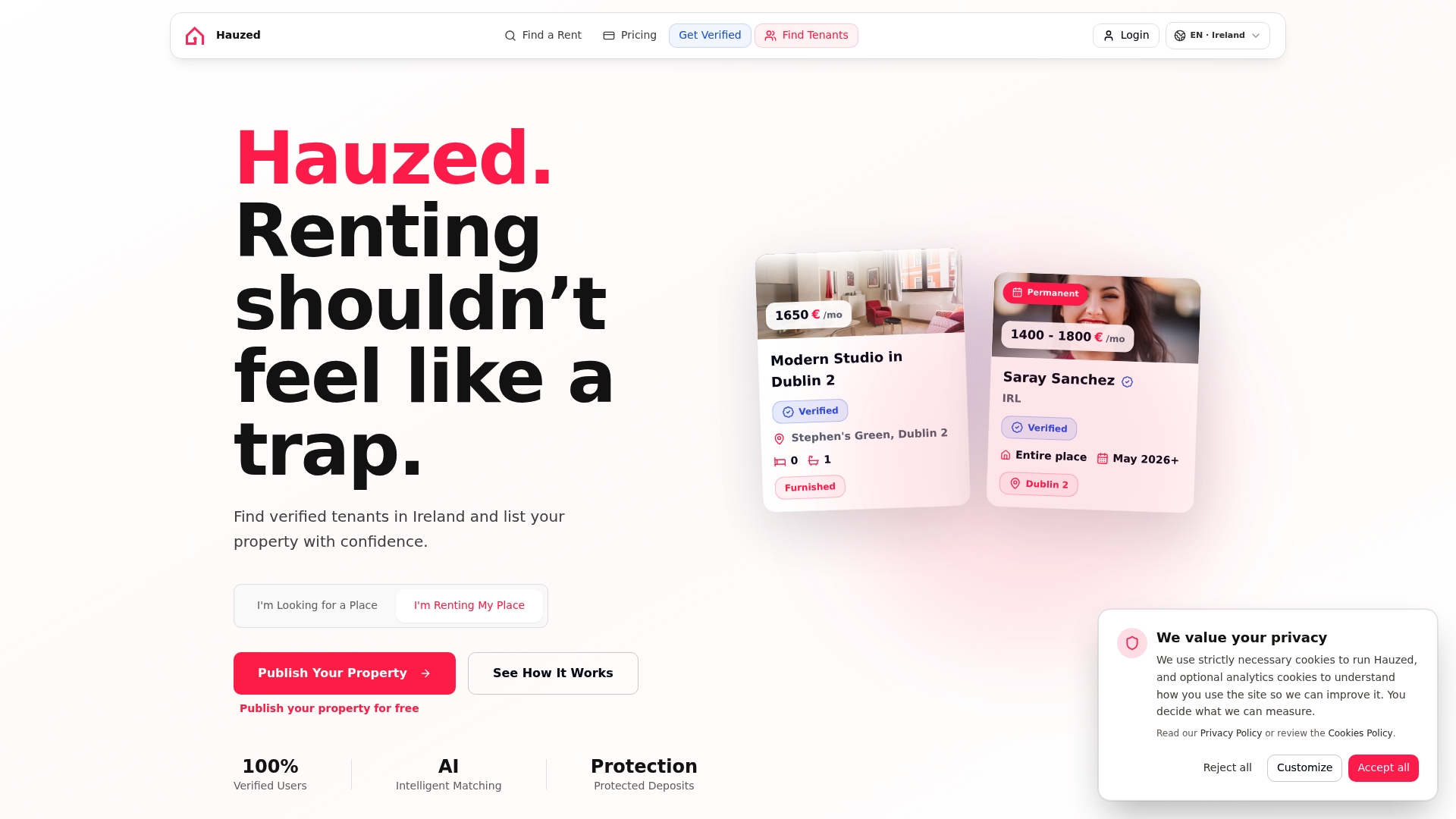
Verification changes what kind of message lands in your inbox in the first place. On Hauzed, tenants build a verified rental profile before they ever send a request, which means the enquiries landlords receive carry more context: identity verification, stated preferences, sometimes supporting documents shared with consent. That cuts down the back-and-forth of asking basic screening questions before a conversation can even start.
The messaging layer is built around the same speed problem this article has been describing:
Requests and invitations attach every conversation to a specific property, so nothing arrives as an anonymous, context-free message.
In-app chat keeps the whole exchange in one place rather than scattered across WhatsApp, email and a listing portal's own inbox.
Echo helps draft fast, sensible first replies and follow-ups, with the landlord reviewing before anything sends.
Hauzer surfaces tenant matches for a property, reducing time spent manually filtering through unsuitable enquiries.
Lia supports leasing conversations, including WhatsApp-style workflows, where available.
Visit scheduling happens inside the same platform, so confirming, rescheduling or cancelling a viewing does not require a separate message thread.
None of this replaces human judgement on who actually gets the property. It removes the friction that stops a landlord answering the right enquiries quickly, and the tenant side of that same flow shows how requests, invitations and chat all sit under one roof rather than fragmented across channels.
Publisher perspective: speed as a signal, not a shortcut
Everything in this guide points to one idea: response time is not a soft courtesy metric, it is a proxy for whether your rental operation is actually organised. Guests read a fast, specific reply as competence, and a slow or vague one as chaos behind the scenes, whether or not that is fair.
Automation only works when it protects service quality rather than replacing it. An instant acknowledgement that gives a real answer buys you the time to reply properly; a generic bot message that ignores the question just delays the guest's frustration by an hour.
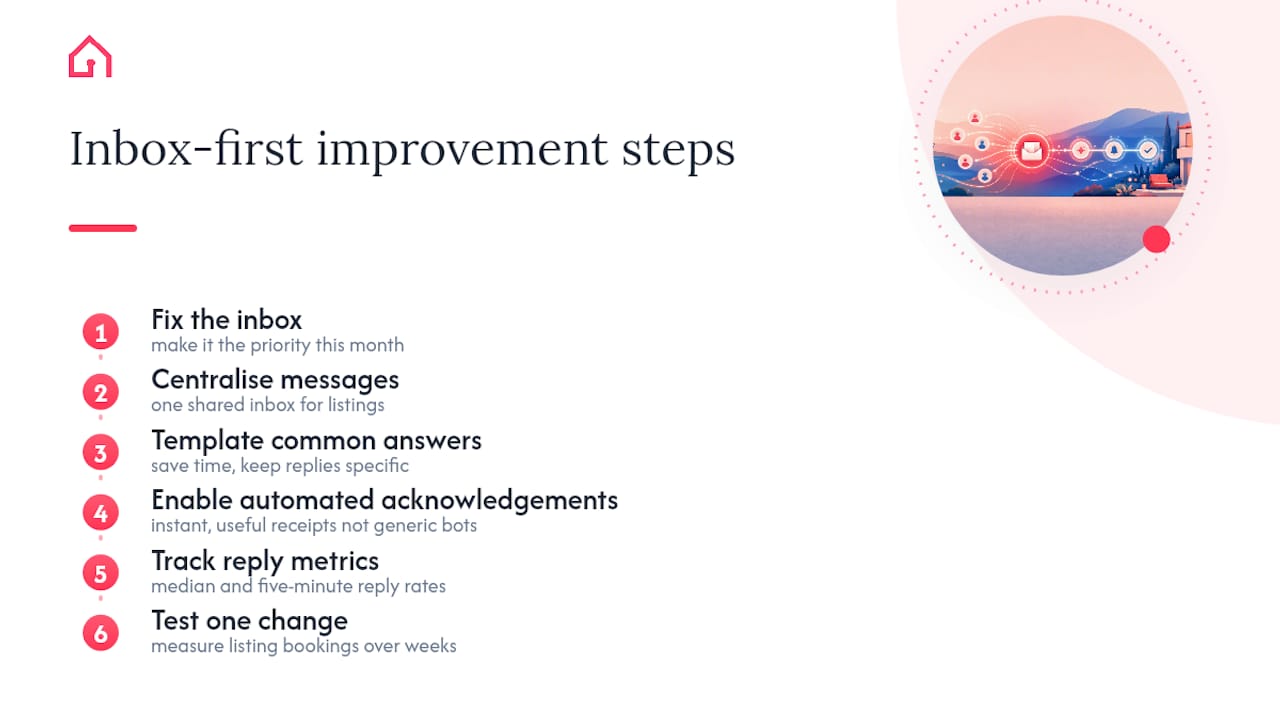
If you fix one thing this month, fix the inbox. Centralise it, template your common answers, switch on automated acknowledgements, and start tracking your median and five-minute reply rates. Then test one change at a time and watch what happens to bookings on the same listing over the following weeks.
— Hauzed
Getting response time right without adding headcount
Hauzed is built around the exact friction this guide has covered: verified tenant profiles mean the messages reaching a landlord's inbox are already better qualified, so less time gets spent replying to enquiries that were never going anywhere. Requests, invitations, in-app chat and visit scheduling all sit inside one platform, and AI agents including Hauzer, Echo and Lia help draft fast first replies and follow-ups without a landlord losing control of what actually gets sent.
Tenant access to Hauzed is free, and landlords and agencies choose between tiered plans depending on how many active properties and how much AI support they need, so it is worth checking current plan details directly rather than assuming a fixed rate. If message overload and slow replies are costing you bookings, the practical next step is to see the workflow for yourself on the Hauzed marketplace and set up your first verified property listing.
Aim for an instant automated acknowledgement the moment a message arrives, followed by a genuine human reply within 60 minutes. For direct booking channels, replies under 60 seconds with availability and a booking link show measurable conversion gains.
How does Airbnb measure host response time?
Airbnb calculates response time from the moment a guest sends a message to the moment the host replies, and this figure feeds directly into Superhost status and search ranking.
Does Vrbo track responsiveness the same way?
Vrbo runs its own responsiveness metric inside its host inbox, and slow or inconsistent replies there can reduce how prominently a listing appears to guests browsing the platform.
Why should I track median and P90 response time instead of the average?
An average can look healthy even when a small share of guests wait hours for a reply. Tracking the median alongside the 90th percentile shows both the typical experience and the worst-case delays that actually cost bookings.
Can automation fully replace a human reply?
No. Automated first replies work well for availability checks, pricing and booking links, but complex requests and anything involving a complaint still need a human reviewing before a message goes out. Tools like Hauzed's Echo draft fast responses while keeping the landlord in control of what actually sends.
Does faster response time really increase bookings?
Yes. Industry analysis shows improving response rates from the high 80s towards near 100% can meaningfully increase bookings, largely because guests comparing several listings tend to book whoever answers first.