Tenancy agreements in Ireland: what you need to know
23 June 2026
10 min read
Learn what is a tenancy agreement in Ireland and understand your rights as a tenant. Protect yourself before signing a rental contract!
A tenancy agreement in Ireland is a legally binding contract that grants a tenant exclusive right to occupy a residential property in exchange for rent, governed by the Residential Tenancies Act 2004 and its subsequent amendments. Understanding what is a tenancy agreement Ireland means knowing your rights before you sign anything. The contract binds both landlord and tenant to specific obligations, and breaching those obligations carries real legal consequences. Whether you are renting for the first time in Dublin or renewing an existing Ireland rental contract, knowing what your agreement must contain protects you from costly surprises.
What is a tenancy agreement in Ireland?
A private residential tenancy agreement is a legally binding contract that creates exclusive occupation rights in exchange for rent and must be registered with the Residential Tenancies Board (RTB) within one month of the tenancy starting. The RTB is the statutory body that oversees the private rental sector in Ireland. Registration is not optional. Failure to register can expose a landlord to penalties and limits their ability to pursue disputes through the RTB.
Tenancy agreements can take three forms: written, verbal, or implied. A written agreement is the clearest and safest option for both parties. However, verbal or implied agreements can also create valid tenancies if the occupant has exclusive possession of the property. Irish law looks at the substance of the arrangement, not just the paperwork.
The Residential Tenancies Act 2004 sets the legal floor for all residential tenancies. Any clause in your agreement that contradicts the Act is unenforceable. That means your statutory rights as a tenant cannot be signed away, no matter what the contract says.
What should a tenancy agreement include?
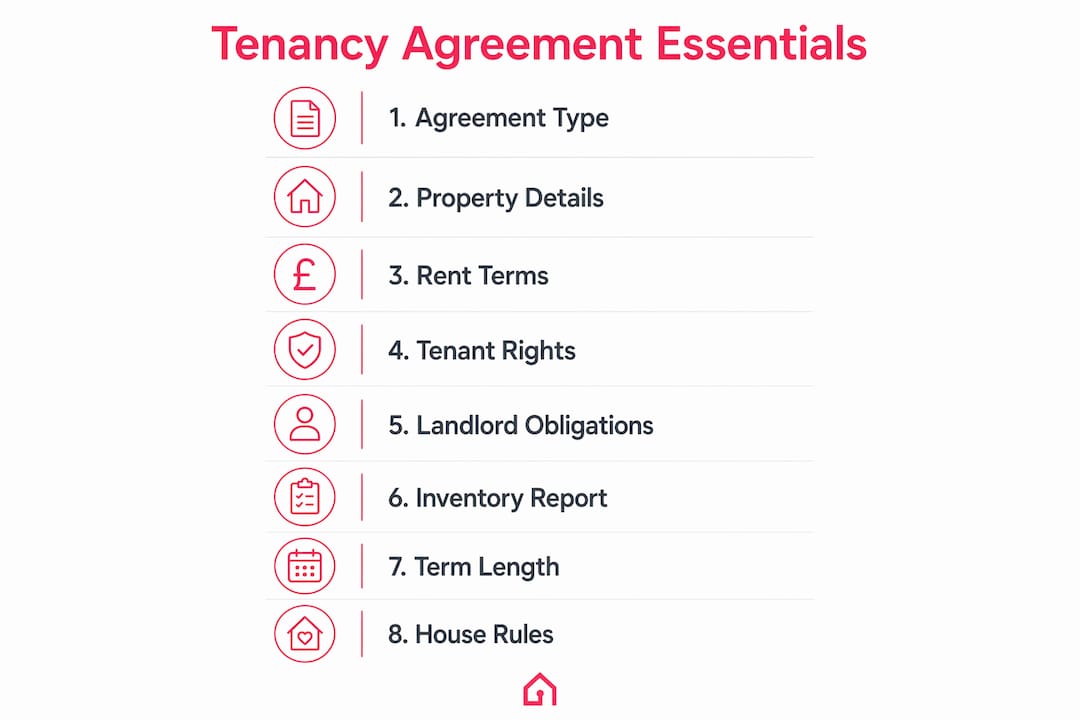
A valid Irish tenancy agreement should clearly set out the terms that govern the entire rental relationship. The RTB provides a template for tenancy agreements effective from march 2026, which gives both landlords and tenants a reliable starting point. Using this template reduces the risk of missing a legally required term.
Related Topics
#understand irish lease agreements#what is a lease agreement ireland#what to include in a tenancy agreement#Ireland rental contract#landlord tenant agreement Ireland#lease agreement in Ireland#types of tenancy agreements#what is a tenancy agreement ireland#how to create a tenancy agreement#tenancy rights in Ireland#tenancy agreement explained
Related Articles
The core terms your agreement should cover include:
Rent amount and payment frequency: State the monthly rent clearly, along with the due date and accepted payment methods.
Security deposit: The deposit amount must be specified. Under Irish law, a landlord cannot charge more than one month's rent as a deposit.
Utility responsibilities: Clarify which bills the tenant pays and which the landlord covers.
Property maintenance: Define who is responsible for repairs, garden upkeep, and general maintenance.
Tenancy duration: Specify whether the tenancy is fixed-term (for example, 12 months) or periodic (rolling month to month).
Termination and notice periods: Outline the notice required from each party to end the tenancy lawfully.
Break clauses: If included, a break clause allows either party to exit a fixed-term agreement early under defined conditions.
The RTB's March 2026 template also prompts landlords to include details about the property's BER rating, house rules, and any restrictions on use. These additions reduce ambiguity and the disputes that follow from it.
Pro Tip:Before you sign, request an inventory and condition report. An inventory with photographic evidence, signed by both parties at the start of the tenancy, is the single most effective way to protect your deposit when you leave.
What rights and protections do tenants have?
Tenant protections under Irish law are substantial, and your tenancy agreement cannot remove them. Security of tenure grants tenants protection from eviction after six continuous months of tenancy, regardless of any fixed-term date in the agreement. After that point, a landlord can only end the tenancy for specific legally defined reasons, such as the landlord needing the property for personal use or planning significant renovations.
Rent increases are also tightly controlled. The key protections work as follows:
Unenforceable clauses: Any clause in your agreement that attempts to raise rent beyond the legal cap is unenforceable. You can challenge it through the RTB without going to court.
Landlord registration duty: Your landlord must register the tenancy with the RTB. This registration protects your rights and creates an official record of the tenancy.
Property maintenance: Your landlord is legally required to keep the property in good repair and comply with minimum standards for rental accommodation.
Dispute resolution: If a dispute arises, the RTB offers a mediation and adjudication service. Tenants can refer cases involving unlawful eviction, deposit retention, or rent increases to the RTB directly.
Industry observers highlight that tenants should carefully review rent increase clauses to confirm compliance with Rent Pressure Zone regulations. A clause that simply states "rent may increase annually" without specifying the legal cap is a red flag worth querying before you sign.
Lease terms that directly contradict statutory tenant rights, such as unlawful rent caps or notice periods, are overridden by law. The contract cannot waive your statutory protections.
Lease vs licence: what is the difference in Ireland?
The distinction between a lease and a licence is one of the most misunderstood areas of Irish tenancy law. It matters enormously because only a lease provides full statutory tenant protections under the Residential Tenancies Act.
Feature
Lease
Licence
Exclusive possession
Yes
No
Statutory tenant protections
Full RTB protections apply
Generally not applicable
Security of tenure
Granted after 6 months
Not available
Typical use
Standard residential rental
Lodger arrangements, short stays
Court reclassification risk
Low
High if exclusive possession exists
The legal distinction hinges on exclusive possession. A lease grants the tenant the right to exclude all others, including the landlord, from the property. A licence merely grants permission to occupy without that exclusivity. A lodger living in a landlord's home, for example, typically holds a licence rather than a lease.
The critical point is that Irish courts look beyond the label on the document. If your agreement is called a "licence" but you have exclusive possession of the property, courts may reclassify it as a lease. Legal experts emphasise that only leases provide statutory tenant protections, making this distinction one of the most consequential in Irish rental law.
Pro Tip:If a landlord presents you with a "licence agreement" for a self-contained flat or apartment, seek independent legal advice. The substance of your occupation, not the document's title, determines your legal status.
Practical tips for managing your tenancy agreement
Understanding the agreement is only half the work. Handling it correctly from day one protects you throughout the tenancy.
Use the RTB template: The RTB's 2026 template covers all legally required terms. If your landlord provides a different document, compare it against the RTB version before signing. You can find guidance on rental agreements to help you spot gaps.
Register promptly: Landlords must register the tenancy with the RTB within one month. Ask your landlord to confirm registration and keep the RTB reference number.
Document the property condition: Complete a written inventory with photographs on the day you move in. Both parties should sign it. This record is your primary defence if a landlord later disputes your deposit return.
Understand your break clause: If your agreement includes a break clause, read it carefully. Know the notice period required, any conditions attached, and whether it applies to both parties or only one.
Check for illegal clauses: Watch for clauses that prohibit children, restrict visitors unreasonably, or waive your right to a minimum notice period. These clauses are unenforceable under Irish law.
Know your exit costs: Breaking a fixed-term tenancy early without a break clause generally results in financial liability for the remaining rent unless the landlord consents or you arrange a lease assignment.
Use the RTB for disputes: If your landlord refuses to return your deposit or serves an unlawful notice, contact the RTB. Their dispute resolution service is free and does not require a solicitor.
Keeping a paper trail throughout your tenancy, including copies of all correspondence, rent receipts, and maintenance requests, gives you a strong position if any dispute arises.
Key takeaways
A tenancy agreement in Ireland is a legally binding contract governed by the Residential Tenancies Act 2004, and any clause that contradicts your statutory rights is unenforceable regardless of what you have signed.
Point
Details
Legal basis
All residential tenancies are governed by the Residential Tenancies Act 2004 and must be registered with the RTB.
Must-have terms
A valid agreement covers rent, deposit, utilities, duration, termination notice, and maintenance responsibilities.
Tenant protections
Security of tenure applies after six months; rent increases in Rent Pressure Zones are capped at 2% annually.
Lease vs licence
Only a lease grants full statutory protections; courts reclassify licences as leases if exclusive possession exists.
Deposit protection
A signed inventory with photographs at move-in is the most reliable way to protect your deposit at move-out.
Hauzed's view on tenancy agreements in Ireland
The single biggest mistake tenants make is treating the tenancy agreement as a formality rather than a legal document. At Hauzed, we see this pattern repeatedly. Tenants sign quickly because they are relieved to have found a property, and they only read the agreement carefully when something goes wrong.
The RTB's 2026 template is a genuine improvement. It forces landlords to address terms that were previously left vague or omitted entirely. But a template only works if both parties understand what they are agreeing to. A clause about rent review that references "market rates" without mentioning Rent Pressure Zone caps is not just sloppy drafting. It is a clause that could cost you money if you do not challenge it.
The lease versus licence distinction is another area where tenants consistently underestimate their position. Landlords occasionally present licence agreements to avoid the obligations that come with a full tenancy. The law does not support that approach when exclusive possession exists. Knowing this gives you real leverage before you sign.
For landlords, a clear and compliant agreement is not a burden. It is protection. A well-drafted contract registered with the RTB gives you a documented basis for every decision you make during the tenancy, from rent reviews to termination. The landlords who face the most disputes are usually the ones who relied on informal arrangements or outdated templates.
The rental market in Ireland is competitive and fast-moving. That pressure can make both tenants and landlords cut corners. A properly understood tenancy agreement is the one document that protects both sides when the relationship becomes difficult.
— Hauzed
Renting in Ireland with more confidence through Hauzed
Navigating a tenancy agreement is easier when you start from a position of trust. Hauzed is a verified rental marketplace built for Ireland, connecting tenants with landlords and agencies through a process designed to reduce scams, ghosting, and information gaps.
Tenants on Hauzed can build a verified rental profile, search properties for rent in Ireland, send requests, and coordinate viewings through one organised platform. Landlords and agencies can publish properties, review verified tenant profiles, and manage conversations with AI support from Hauzer and Echo. Whether you are a first-time renter trying to understand your rights or a landlord looking for better-qualified interest, Hauzed's rental marketplace gives both sides a clearer, safer starting point.
FAQ
What is a tenancy agreement in Ireland?
A tenancy agreement in Ireland is a legally binding contract between a landlord and tenant that grants exclusive occupation of a residential property in exchange for rent, governed by the Residential Tenancies Act 2004.
Does a tenancy agreement have to be in writing in Ireland?
No. Verbal and implied agreements can create valid tenancies in Ireland if exclusive possession exists. However, a written agreement is strongly recommended as it provides clear evidence of the agreed terms.
When does security of tenure apply in Ireland?
Security of tenure applies after six continuous months of tenancy. After this point, a landlord can only end the tenancy for specific legally defined reasons set out in the Residential Tenancies Act.
What is the difference between a lease and a licence in Ireland?
A lease grants exclusive possession and full statutory tenant protections. A licence grants permission to occupy without exclusive possession and does not carry the same legal protections. Courts can reclassify a licence as a lease if exclusive possession is found to exist.
Can a landlord increase rent at any time in Ireland?
No. In designated Rent Pressure Zones, rent increases are capped at 2% annually. Any clause in a tenancy agreement that attempts to exceed this cap is unenforceable under Irish law.