Verified rental listing explained: your 2026 guide
4 July 2026
10 min read
Discover what a verified rental listing explained means in 2026. Learn to spot genuine opportunities, avoid scams, and understand your rights.
A verified rental listing is a property advertisement that meets mandatory transparency and compliance criteria designed to safeguard renters and reduce fraud. In the UK, this concept has become far more concrete since the introduction of National Trading Standards Material Information requirements and the Renters' Rights Act 2026. Understanding what a verified rental listing means in practice gives you a real advantage: you can spot genuine opportunities faster, avoid scams more confidently, and know your legal rights before you ever sign anything.
What makes a rental listing verified?
A verified rental listing meets specific legal disclosure requirements set by National Trading Standards, enforced across major property portals. These requirements are split into three parts, and all three matter when you are assessing whether a listing is genuinely compliant.
Part A: Property type, number of bedrooms and bathrooms, monthly rent, and council tax band. These must appear on every listing without exception.
Part B: Flood risk, planning restrictions, and any known structural issues. Portals flag or reject listings that omit these disclosures.
Part C: Leasehold details, including service charges and ground rent where applicable. This is especially relevant for flats.
EPC rating: The Energy Performance Certificate rating must be displayed. A missing EPC is a clear signal that a listing has not been properly prepared.
Tenure: Freehold or leasehold status must be stated. Omitting this is a common shortcut that verified listings do not take.
Beyond property details, the agent behind the listing must also meet legal standards. All UK letting agents must belong to a government-approved redress scheme and a client money protection scheme. These memberships are not optional. They exist so that you have a formal route to complain or claim compensation if something goes wrong.
The Renters' Rights Act 2026 adds further protections directly tied to listing conduct. Rental bidding is now banned, meaning landlords cannot invite or accept offers above the advertised rent. Holding deposits are capped at one week's rent. Rent cannot be demanded before a tenancy agreement is signed, with fines of up to £7,000 for violations. A listing that asks you to pay anything upfront before a contract is in place is not operating within verified standards, regardless of any badge it displays.
Related Topics
#verified rental listing benefits#agency rental listing best practices#verified rental listing explained#why choose verified rental listings#how to verify rental listings#rental listing legitimacy explained#benefits of verified rental listings#understanding rental listing verification
Related Articles
Pro Tip:Confirm an agent's redress scheme membership independently. Do not rely solely on what the listing states. Check the official databases for the Property Redress Scheme and The Property Ombudsman directly.
What are the benefits of verified rental listings for tenants?
Verified listings give you something that anonymous or unregulated adverts cannot: a baseline of transparency before you commit any time or money. The benefits are practical, not just theoretical.
Reduced fraud risk. Listings that comply with Material Information requirements are harder to fake convincingly. Scammers rarely invest the effort to fabricate council tax bands, EPC ratings, and tenure disclosures accurately.
Access to key details before viewing. You know the rent, the council tax band, the EPC rating, and the tenure before you set foot inside. That means you can filter out unsuitable properties without wasting a viewing slot.
Legal protection on holding deposits.Holding deposits are legally limited to one week's rent and must be refunded if the tenancy does not proceed through no fault of your own. Always get a written receipt.
Fee transparency. Under the Tenant Fees Act 2019, agents must display their fee information publicly, including on portal listings. A verified listing will either show fees or link to a full fee schedule.
A formal complaints route. Because verified agents belong to a redress scheme, you have a structured process to raise disputes. This matters enormously if a deposit is withheld unfairly or a landlord fails to carry out repairs.
The practical difference shows up most clearly during disputes. If an agent is not registered with a redress scheme, your options are limited to civil court. If they are registered, you can escalate a complaint without legal fees and receive a binding decision. That protection starts with choosing listings from agents who meet verified standards.
How can renters verify a rental listing independently?
Verified status on a portal is a useful starting point. It is not the end of your due diligence. Here is how to confirm a listing is genuine before you invest any time or money.
Run a Land Registry title search. A £3 Land Registry search tells you who the registered owner is. If the person advertising the property is neither the owner nor an authorised agent, that is a serious red flag. This step takes ten minutes and costs almost nothing.
Check the agent's redress scheme membership. Visit the Property Redress Scheme or The Property Ombudsman website and search for the agent by name. If they do not appear, do not proceed. Cross-referencing agent registration and client money protection increases your safety beyond what portals guarantee alone.
Look for red flags in the listing itself. Unrealistically low rent for the area, generic or mismatched photos, and missing mandatory fields are all warning signs. If the listing lacks a council tax band or EPC rating, it has not met basic verified standards.
Insist on an in-person or trusted virtual viewing. Never pay anything based on photos alone. Check that the property's exterior matches what you see on Google Street View. Fire safety standards, including working smoke alarms and carbon monoxide detectors, should be visible or confirmed during the viewing.
Never pay before signing a contract. This rule is absolute. Rent cannot legally be demanded before a tenancy agreement is signed under the Renters' Rights Act 2026. Any request for payment before a contract is a scam signal, regardless of how professional the listing appears.
Pro Tip:Build a relationship with two or three local letting agents who know your requirements. Agents frequently notify trusted renters about properties before they go live publicly. That early access is worth more than any portal filter.
Understanding how to spot fake rental listings is a skill that pays off every time you search, not just when something feels wrong.
Common red flags even in supposedly verified listings
Verified status is not a guarantee of safety. Scammers adapt quickly, and some tactics specifically target renters who trust portal badges without looking further.
Scraped listings. Scammers copy genuine, compliant listings and repost them under fake contact details. The listing looks perfect because it was originally real. The contact behind it is not. Always verify the agent or landlord independently, not just the listing content.
Photo inconsistencies. Generic or mismatched photos taken from short-term rental platforms are a common scam signal. If the interior photos look like a holiday let, or if the exterior does not match the address on Google Street View, treat the listing with caution.
Unusually low rent. A listing marketing unusually low rent for the area is one of the oldest scam tactics. If the price seems too good to be true for that postcode, it almost certainly is.
Pressure on holding deposits. Legitimate agents do not rush you to pay a holding deposit before you have viewed the property or received written terms. Pressure to pay quickly, especially via bank transfer to a personal account, is a strong warning sign.
A verified badge without agent details. Some listings display verification markers without naming the agent or providing redress scheme information. A badge without verifiable agent credentials offers no real protection.
Phishing tactics in the rental market often follow a listing enquiry. Scammers use your initial contact to gather personal details or redirect you to fake payment pages. Knowing this pattern helps you stay alert throughout the process, not just at the listing stage.
Key takeaways
A verified rental listing is your first line of defence against fraud, but it works best when you combine it with independent checks and a clear understanding of your legal rights.
Point
Details
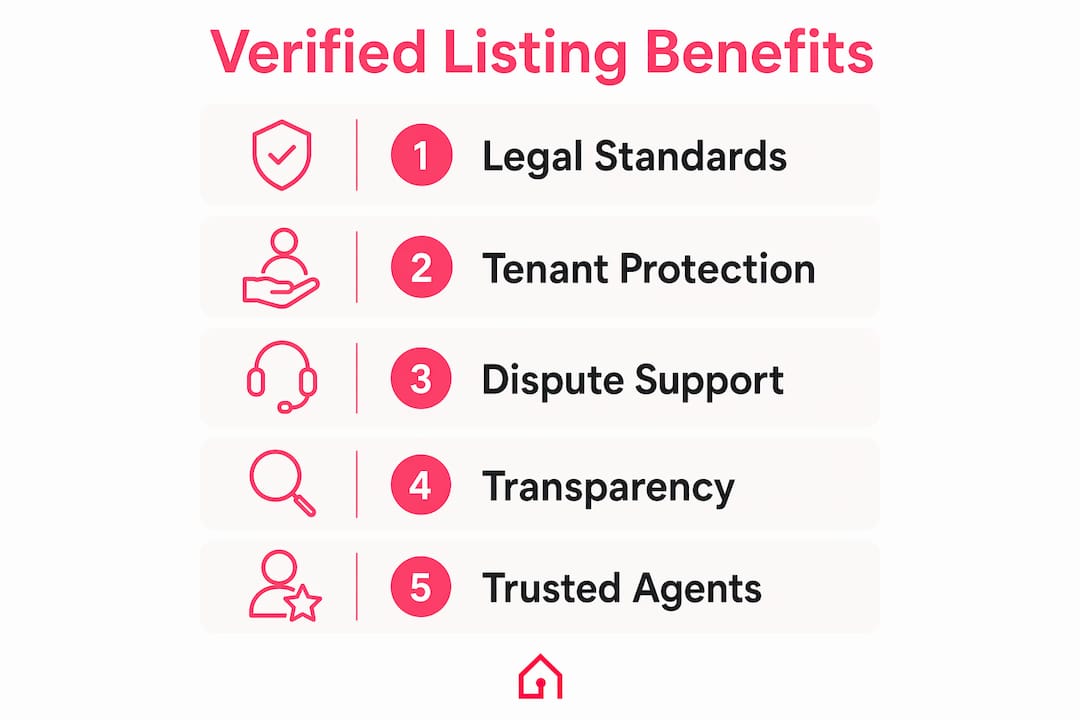
Verified listings meet legal standards
Material Information requirements and Renters' Rights Act 2026 compliance define what a verified listing must include.
Agent membership is mandatory
All legitimate letting agents must belong to a government-approved redress scheme and a client money protection scheme.
Independent checks are non-negotiable
A Land Registry search and a redress scheme database check confirm what a portal badge cannot.
Never pay before signing
Rent and fees cannot legally be demanded before a tenancy agreement is signed under current UK law.
Verified status has limits
Scammers scrape genuine listings; always verify the agent behind the listing, not just the listing content itself.
The honest truth about verified listings
Verified listings changed how I think about renter safety, but not in the way most people expect. The badge matters less than the behaviour behind it.
The renters who navigate the market most successfully are not the ones who filter by "verified" and stop there. They are the ones who treat verification as the opening question, not the final answer. They run the Land Registry check. They look up the agent. They visit the property before they pay anything. They keep receipts for every interaction.
The 2026 regulatory changes are genuinely significant. Banning rental bidding and capping holding deposits removes two of the most common pressure tactics used against renters. But regulations only protect you if you know they exist and enforce them. A landlord who asks for rent before a contract is signed is breaking the law. You have the right to refuse and walk away.
The other thing worth saying plainly: a strong rental profile changes your position in this market. Renters who arrive at a viewing with references prepared, a clear employment history, and a concise personal bio move faster through the process. Agents remember them. That speed matters when a good property receives dozens of enquiries within hours of going live.
Verified listings give you a safer starting point. Your own preparation determines what happens next.
— Hauzed
Safer renting starts with the right platform
Hauzed is built around the idea that renting should not feel like a risk. The platform connects renters with verified listings and verified landlords, so you spend less time second-guessing and more time finding a home that actually fits.
Renters can search, save listings, verify their identity, and build a rental profile that stands out to landlords and agents. Every step is designed to reduce the friction and uncertainty that makes renting stressful. If you are ready to search with more confidence, browse verified rentals on Hauzed and see what a trust-first rental marketplace looks like in practice.
FAQ
What is a verified rental listing?
A verified rental listing is a property advertisement that meets mandatory transparency and compliance standards, including Material Information disclosures and agent redress scheme membership, designed to protect renters from fraud.
How do I check if a letting agent is legitimate?
Search for the agent by name on the Property Redress Scheme or The Property Ombudsman website. Legitimate agents must appear on one of these government-approved databases.
Can I get my holding deposit back if the tenancy falls through?
Yes. Holding deposits are legally limited to one week's rent and must be refunded if the tenancy does not proceed through no fault of your own. Always request a written receipt.
What are the biggest red flags in a rental listing?
Unusually low rent, generic or mismatched photos, missing mandatory fields such as EPC rating or council tax band, and pressure to pay before signing a contract are the most common warning signs.
Does a verified badge mean a listing is completely safe?
No. Verified status is a baseline, not a guarantee. Scammers scrape genuine listings and repost them with fake contact details. Always verify the agent independently and never pay before a tenancy agreement is signed.