Discover what is a house share Dublin explained in our 2026 guide. Learn the benefits, responsibilities, and key features of shared living.
A house share in Dublin is a rental arrangement where multiple people rent a property together, each occupying a bedroom while sharing communal spaces such as the kitchen, bathroom, and living room. Most house shares operate under what Citizens Information calls a "jointly and severally liable" tenancy, meaning every tenant on the lease is legally responsible for the full rent, not just their own portion. If one housemate stops paying or moves out, the remaining tenants must cover the shortfall.
Understanding this distinction before you sign anything is the most practical thing you can do.
Key features of a Dublin house share at a glance:
Multiple tenants share one property and split rent and bills
Each tenant typically has a private bedroom; kitchens, bathrooms, and living rooms are shared
Joint tenancy liability means each person can be held responsible for the entire rent
If you rent a room in your landlord's home, you are a licensee, not a tenant, and have fewer legal protections
Licensees cannot access the Residential Tenancies Board (RTB) dispute resolution service
Tenancy agreements should be read carefully before signing
The distinction between a standard joint tenancy and a licensee arrangement matters enormously. Under a licensee agreement, your landlord can end the arrangement with reasonable notice and is not required to register with the RTB. You also lose access to the Equal Status Acts protections. If you are renting a self-contained flat within a landlord's home, however, residential tenancies legislation does apply.
Why do people choose to share rented accommodation in Dublin?
Dublin's rental market is competitive and expensive, which makes house sharing one of the most practical ways to live in the city without stretching your finances to breaking point. Splitting rent and bills across several people means you can often afford a better-located or better-furnished property than you could manage alone. For students and young professionals especially, it removes the pressure of covering a full deposit and monthly rent on a single income.
Beyond the financial side, there are genuine lifestyle benefits too:
Related Topics
#what is a house share dublin explained#how to find a house share in Dublin#shared accommodation Dublin#what is shared accommodation Dublin#benefits of house sharing Dublin#Dublin house share guide#is house sharing a good idea?#cost of house share Dublin#Dublin house share arrangements#living in a house share Dublin#what to know about house shares#Dublin house share tips#room sharing Dublin#room sharing Dublin explained#house share vs renting Dublin#house sharing in Dublin#how to find house share Dublin#Dublin house share for students#benefits of house share Dublin#benefits of house share
Related Articles
Lower rent and bills: Costs are divided, giving you more disposable income each month
Access to better properties: Shared costs make nicer areas and larger homes more affordable
Shared household duties: Cleaning, bins, and general upkeep are divided among housemates
Social connection: Living with others can expand your social circle, particularly if you are new to Dublin
Flexibility: Many house share agreements offer shorter or more adaptable terms than solo rentals
Easier entry: Lower individual deposit requirements make it more accessible for those just starting out
House sharing is particularly attractive to those who want to move out of a family home without taking on all the costs at once. It is also a sensible short-to-medium-term option while you save for a deposit or settle into a new city.
How to find shared rented accommodation in Dublin
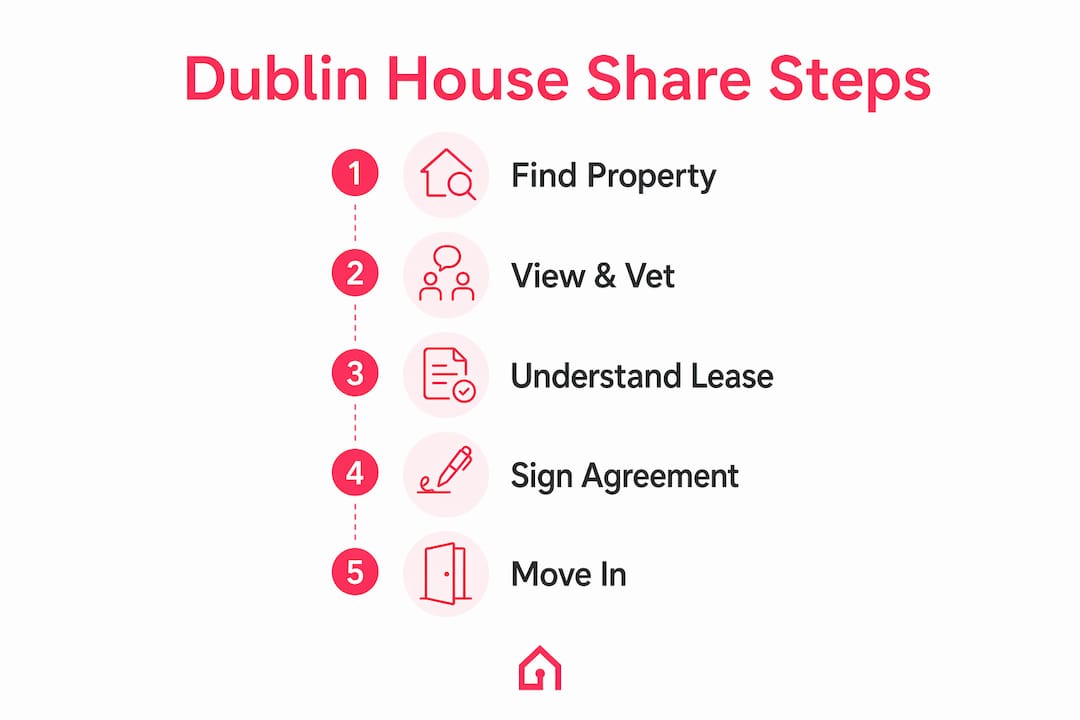
Dublin has several reliable channels for finding a house share, though the market moves quickly and good rooms go fast. Knowing where to look, and how to approach viewings, gives you a real advantage.
Where to search:
Online property and rental listing platforms with shared accommodation filters
University and college notice boards, particularly for student-friendly areas
Community centres, local shops, and library notice boards
Social media groups focused on Dublin housing and rentals
Word of mouth through colleagues, classmates, and existing networks
Always view a property in person before committing. Remote renting carries real risk: photos can be misleading, and scam listings are a genuine problem in Dublin's fast-moving market. An in-person visit lets you check the condition of the property, meet potential housemates, and confirm the landlord is who they say they are.
Pro Tip:If you are new to Dublin, secure temporary accommodation first, such as a hostel or short-term rental, before committing to a house share. Being on the ground makes it far easier to attend viewings quickly, which is often the difference between getting a room and missing it.
What to check before renting a room in a shared house
Rushing into a house share without asking the right questions is where most problems begin. Take time to clarify the following before you sign or hand over any money.
Key questions to ask the landlord:
Are you the property owner, or are you subletting?
What type of agreement will I sign: a tenancy or a licensee arrangement?
Is the tenancy registered with the RTB?
How is rent collected, and who pays the landlord directly?
Are bills included, or split separately?
What is the notice period if either party wants to end the arrangement?
Practical considerations before moving in:
Meet your potential housemates in person and assess whether your lifestyles are compatible
Clarify house rules around guests, noise, cleaning rotas, and shared food
Confirm the duration of the agreement and whether it can be extended
Check what is included in the rent (furniture, broadband, utilities)
Ask about the deposit amount and the conditions for getting it back
Understand what happens if a housemate leaves mid-tenancy
Couples renting a room in a shared house may be expected to pay 15-40% more than single occupants, depending on room size and usage. Utility bills are usually split evenly among all residents to keep arrangements fair and transparent.
Tenant responsibilities and legal liabilities in a Dublin house share
The legal side of house sharing catches many people off guard. Under a jointly and severally liable tenancy, every tenant on the lease is individually responsible for the total rent owed to the landlord, not just their own share. If a housemate defaults or disappears, the remaining tenants must cover the full amount or face legal consequences.
This is the single biggest financial risk in house sharing, and it is often overlooked when people are in a hurry to secure a room.
Key tenant responsibilities in a house share:
Pay your agreed share of rent on time, every month
Contribute fairly to household bills and shared expenses
Maintain the property in good condition and report damage promptly
Give proper notice if you intend to leave the tenancy
Understand that your departure may affect the entire tenancy, not just your room
If you are a licensee rather than a tenant, your situation is different. Licensee agreements do not carry the same protections as standard tenancies. Your landlord can end the arrangement with reasonable notice, and you cannot use the RTB's dispute resolution service if a disagreement arises. Your accommodation also does not have to meet minimum physical standards unless you are receiving the Housing Assistance Payment (HAP).
For full detail on your rights depending on your tenancy type, the rental rights guide on the Hauzed blog covers the key distinctions clearly.
Safer renting practices and how verified marketplaces help
Dublin's rental market has a scam problem. Fake listings, phantom landlords, and requests for deposits before a viewing are all real risks, particularly for people searching remotely or under time pressure. Protecting yourself starts with verifying that the landlord and property are genuine before you share any personal information or money.
Safe renting best practices:
Always view the property in person before paying any deposit
Never send money via bank transfer to someone you have not met
Do not share sensitive documents such as passport copies through informal channels like WhatsApp or email
Confirm the landlord's identity and check whether the tenancy is registered with the RTB
Use rental platforms that require identity verification for both tenants and landlords
Upload supporting documents only through secure, consent-based product flows
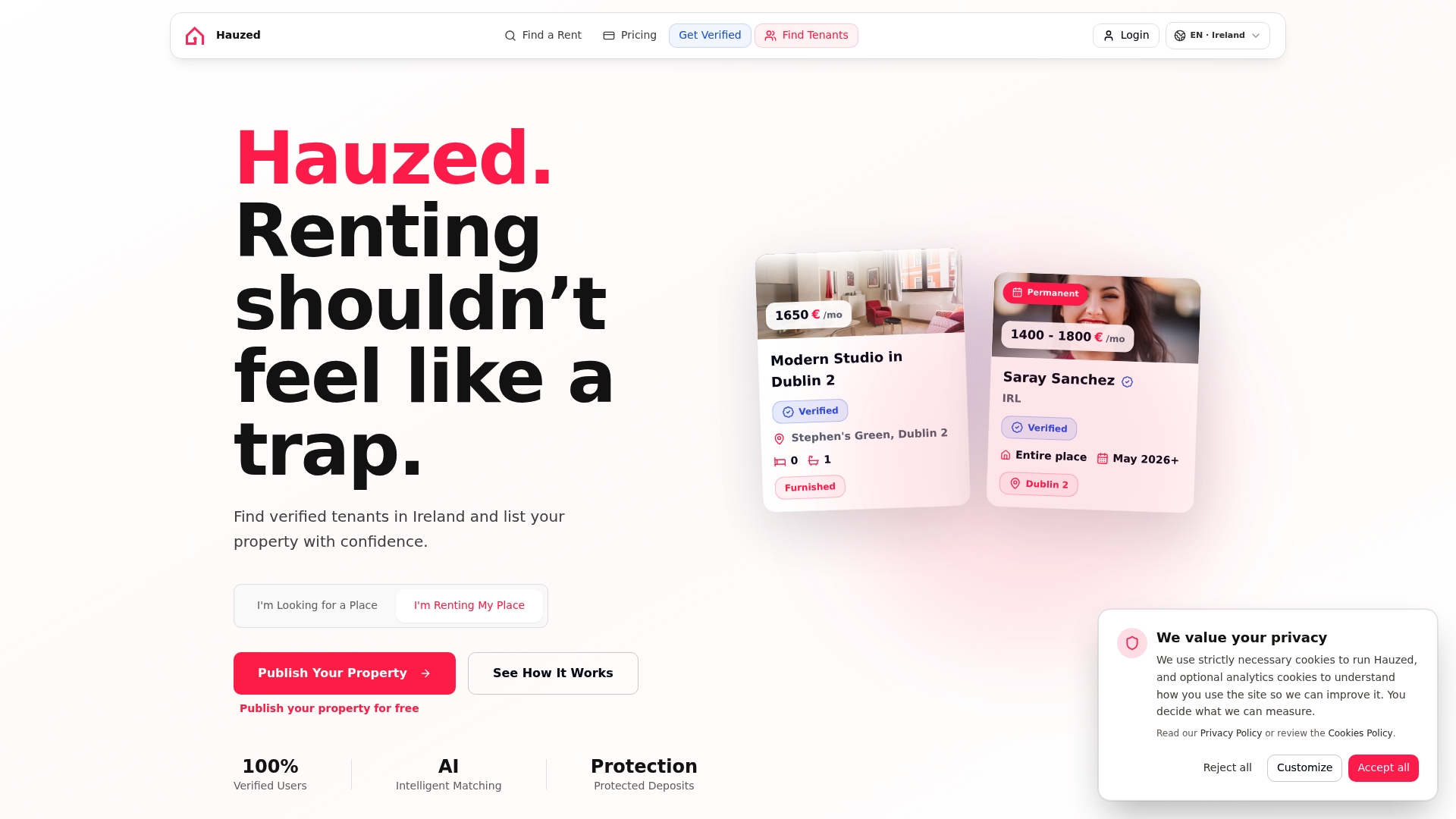
Verified rental marketplaces reduce these risks by requiring participants to confirm their identity before interacting. Hauzed, for example, uses identity verification to ensure that both tenants and landlords are who they claim to be, reducing the volume of fake listings and unqualified enquiries. Tenants can build a complete rental profile, which helps them stand out to landlords without resorting to scattergun messages across multiple channels.
Pro Tip:When using a rental platform, complete your profile fully before sending any requests. A verified profile with clear preferences and supporting documents gives landlords a reason to respond to you first, especially in a competitive market like Dublin.
For practical guidance on renting safely in Dublin, the Hauzed blog covers current best practices in detail.
House share etiquette and how to handle conflict
Good etiquette in a shared house is not about being overly formal. It is about making daily life easier for everyone under the same roof. Most disputes in house shares come down to unspoken expectations, so the best approach is to agree on the basics early.
Respect for communal areas is the foundation. Leaving shared spaces clean after use, not monopolising the bathroom during peak hours, and keeping noise to reasonable levels at night are the basics that most people expect but few explicitly discuss. Agreeing on a cleaning rota from the start removes a lot of friction.
Money is the other common flashpoint. Decide upfront how bills will be split, who manages payments, and what happens if someone is short one month. A shared notes app or a simple group message thread works well for tracking who owes what. When a disagreement does arise, address it directly and early rather than letting resentment build. A calm, private conversation almost always resolves things faster than passive avoidance.
If a conflict cannot be resolved between housemates, and you hold a formal tenancy rather than a licensee arrangement, the RTB offers a dispute resolution service. For licensees, the Small Claims Court is typically the only formal route available.
Finding your house share through Hauzed
Dublin's rental process works better when both sides are prepared and verified before the first conversation. Hauzed is a trust-first rental marketplace built for exactly this: connecting verified tenants with landlords and property agencies in Dublin, without the chaos of anonymous messages, fake listings, or crowded group viewings.
For tenants, Hauzed is free to use. You can search listings, save properties, send requests, receive invitations, and coordinate viewings, all within a single platform where landlords know you are a real, verified person. That matters in a market where landlords receive dozens of messages for every room. A complete, verified profile on Hauzed gives you a genuine advantage over an anonymous enquiry sent through an informal channel.
For landlords, Hauzed's AI tools, including Hauzer for tenant matching and Echo for conversation follow-up, reduce the manual work of filtering and responding to leads. The result is a faster, more organised rental process for both sides. Start your search on Hauzed and approach Dublin's rental market with more confidence.
Key takeaways
A house share in Dublin typically means a jointly and severally liable tenancy, where every tenant is legally responsible for the full rent if a housemate defaults.
Point
Details
Joint liability is the key risk
Every tenant on a joint lease can be held responsible for the total rent, not just their own share.
Licensees have fewer protections
Renting a room in your landlord's home means no RTB access and no minimum accommodation standards (unless on HAP).
Verify before you commit
Always view in person, confirm landlord identity, and check RTB registration before signing or paying a deposit.
Bills are usually split evenly
Utility costs in shared houses are typically divided equally among all occupants to keep arrangements fair.
Hauzed supports safer searching
Hauzed connects verified tenants with landlords in Dublin, reducing scam risk and improving application quality.
FAQ
How does a house share work in Dublin?
Multiple tenants rent a property together, each with a private bedroom and access to shared communal areas. Most arrangements operate under a jointly and severally liable tenancy, meaning all tenants share legal responsibility for the full rent.
Is a house share a good idea in Dublin?
For most students and young professionals, yes. House sharing reduces rent and bills, offers access to better-located properties, and provides flexibility, though you should understand the joint liability implications before signing.
What are the downsides of shared accommodation?
The biggest risk is joint and several liability: if a housemate stops paying, you may be required to cover their share. Lifestyle incompatibility, noise, and disputes over bills and cleaning are also common challenges.
How much more might a couple pay in a shared house?
Couples renting a room in a shared house may be expected to pay 15-40% more than a single occupant, depending on room size and usage, with utility bills typically split evenly among all residents.
What is a licensee agreement and how does it differ from a tenancy?
A licensee agreement applies when you rent a room in your landlord's home. Unlike a standard tenancy, it offers no RTB protections, no minimum accommodation standards (unless you receive HAP), and your landlord can end the arrangement with reasonable notice.