Learn what is a rental scam and how to avoid falling victim. Understand the tactics used by fraudsters and stay safe while renting.
A rental scam is a fraudulent scheme where someone poses as a landlord or letting agent to steal money or personal data from prospective tenants. The FTC reports that consumers lost $65 million to rental fraud between 2020 and 2025, and that figure is almost certainly an undercount. Most victims never report what happened. If you are searching for a rental right now, understanding how rental fraud works is the single most useful thing you can do before you hand over a penny.
What is a rental scam and how does fraud work?
Rental fraud, the formal term for what most people call a rental scam, splits into two main categories. The first is a fully fabricated listing: a property that does not exist or is not available to rent. The second is a hijacked legitimate listing, where a scammer copies a real advert, swaps in fake contact details, and waits for enquiries. Both types share the same goal: cash theft or identity fraud.
Scammers choose online platforms because they offer anonymity and reach. Facebook, Craigslist, and lesser-known classified sites are the most common hunting grounds. A fraudster can post dozens of fake listings in an afternoon, at no cost, and disappear the moment they receive payment.
What are the common types of rental scam tactics to avoid?
Knowing the specific methods scammers use makes them far easier to spot. The most common rental scam tactics include:
Fabricated listings with AI-generated images. Scammers now use AI tools to create photorealistic property photos that show homes that do not exist. Reverse image search can help, but AI-generated photos can bypass standard detection tools.
Self-guided tour scams. This is one of the most convincing tactics. A scammer obtains a real lockbox code for a property, then poses as the landlord and invites you to view it independently. The property looks genuine because it is. The landlord, however, has no idea you were ever there.
Temas relacionados
#rental scam recovery steps#avoid rental deposit scams#why renters lose money to scams#what is an advance fee rental scam#why roommate scams happen online#rental fraud warning signs checklist#rental scam tactics to avoid#how rental fraud works#why rental scams happen online#rental scam red flags examples#types of rental payment scams#what is a rental scam#rental fraud investigation#how to spot rental scams#signs of a rental scam#preventing rental scams#rental scam alerts#reporting a rental scam#rental scam examples#fake rental listings
Advance fee rental scams. You are asked to pay a deposit, application fee, or holding fee before you have signed any agreement or even viewed the property. Legitimate application fees are small and only requested after a verified viewing.
Pressure tactics. The scammer tells you five other people want the flat and you must decide today. This false urgency is designed to stop you from thinking clearly or doing any checks.
Suspicious payment requests. Any landlord asking for payment by wire transfer, cryptocurrency, or gift card is a red flag. These methods are generally non-recoverable once sent.
Pro Tip:If a landlord refuses to meet in person or video call before taking any payment, treat it as a firm warning sign. Legitimate landlords have nothing to hide.
Why do renters lose money to scams more than other groups?
People aged 18–29 are three times more likely to report losing money to rental fraud. That statistic reflects a combination of inexperience, urgency, and platform habits, not carelessness.
Several factors explain why younger renters are disproportionately affected:
Social media reliance. Half of all scam reports in the twelve months ending june 2025 were traced to Facebook adverts. Younger renters are more likely to search for housing on social platforms rather than established property portals.
Competitive markets. In cities like Dublin, demand for rentals is intense. When you have been searching for weeks and a good-looking flat appears at a reasonable price, the temptation to act fast is real.
Unfamiliarity with normal processes. First-time renters often do not know what a legitimate application process looks like. They may not realise that paying a full deposit before signing a tenancy agreement is abnormal.
Online-only communication. Scammers deliberately avoid phone calls and in-person meetings. Renters who accept text or email as the only communication channel remove the most reliable verification layer.
"The best defence against rental fraud is to slow down and verify, rather than succumb to pressure tactics." — North Carolina Department of Justice
Roommate scams follow a similar pattern. Someone posts a room in a shared house, collects a deposit from multiple applicants, and vanishes. These scams thrive online because the informal nature of room-sharing makes people less cautious about skipping formal checks.
How to spot rental fraud: red flags and verification techniques
The most reliable way to avoid rental deposit scams is to verify before you pay anything. Use this comparison to understand the difference between a legitimate listing and a suspicious one.
Signal
Legitimate listing
Suspicious listing
Rent price
Matches local market rates
Noticeably below market
Payment request
After signed agreement
Before viewing or agreement
Communication
Phone, video call, in-person meeting
Email or text only
Listing presence
Appears on multiple major platforms
Only on social media or one obscure site
Deposit amount
Typically one to two months' rent
Unusually high or vague
Identity verification
Landlord provides verifiable details
Refuses to confirm identity
Genuine rentals appear consistently across multiple major platforms. If you find a listing only on Facebook or a single classified site, search the address on Daft.ie, MyHome.ie, or a similar established portal. A mismatch in contact details or price is a clear warning sign.
Check the landlord's identity through official channels. Search the property address against Land Registry records or ask for a copy of a utility bill. Cross-reference any phone number or email address independently rather than using the contact details in the advert itself.
Pro Tip:Run the property photos through Google Images or TinEye. If the same images appear under a different address or landlord name, the listing is almost certainly fraudulent.
Most states and countries limit security deposits to one or two months' rent. Any demand significantly above that threshold warrants serious scrutiny. You can also check a rental agreement guide to understand what a legitimate contract should contain before you commit.
What to do if you have fallen victim to a rental scam
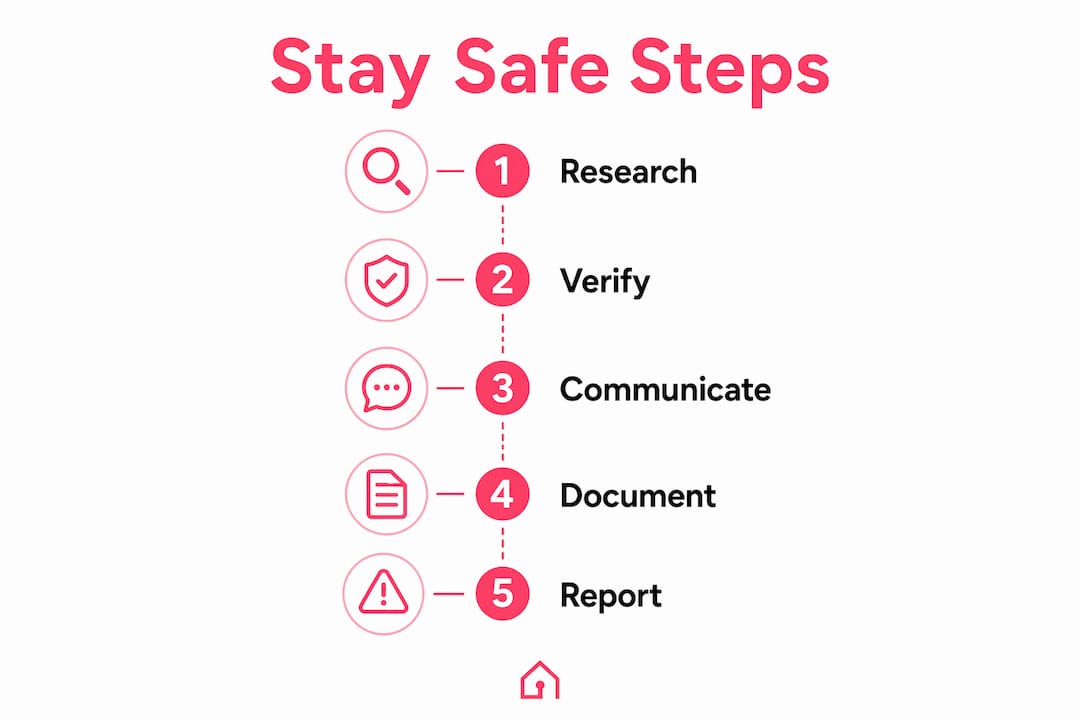
Speed matters. Acting within 24 hours gives you the best chance of recovering funds and limiting further damage. Follow these steps in order:
Contact your bank or payment provider immediately. Report the transaction as fraudulent. Credit card payments offer the strongest protection. Wire transfers and cryptocurrency payments are generally non-recoverable, but your bank may still be able to intervene if you act fast enough.
Build a documentation packet. Collect every screenshot, message, email, payment receipt, and timestamp. Organised evidence significantly improves your chances in a bank dispute and helps law enforcement investigate.
Report to the relevant authorities. In the United States, file a report with the FTC at ReportFraud.ftc.gov. In Ireland, contact An Garda Síochána and report to the Competition and Consumer Protection Commission. In the UK, use Action Fraud.
Protect your identity. If you shared personal documents such as a passport or driving licence, contact your bank about fraud alerts and consider notifying the relevant identity authority in your country.
Report the listing. Flag the fraudulent advert on the platform where you found it. This prevents the scammer from targeting other renters.
These rental scam recovery steps will not always result in a full refund. Wire transfers and cryptocurrency are the hardest to reverse. However, swift reporting creates a paper trail that can support both financial recovery and criminal investigation.
Keep copies of all communications, even after the listing is removed.
Do not engage further with the scammer once you suspect fraud.
Warn others by posting in local community groups or tenant forums.
Key takeaways
Rental fraud is a growing, well-organised threat, and the renters most at risk are those who move quickly without verifying the landlord, the property, or the payment method.
Point
Details
Definition of rental fraud
A scam where someone poses as a landlord to steal money or personal data from prospective tenants.
Highest-risk group
People aged 18–29 are three times more likely to lose money, often through Facebook adverts.
Top warning signs
Below-market rent, upfront payment demands, refusal to meet, and suspicious payment methods.
Best prevention method
Slow down, verify the landlord independently, and never pay before signing a legitimate agreement.
Recovery priority
Act within 24 hours, contact your bank, and report to the FTC or local authorities with full documentation.
Hauzed's take: scams are getting harder to spot, but not impossible
Rental scams have become genuinely sophisticated. When we look at what renters face today, the self-guided tour scam stands out as particularly alarming. A prospective tenant walks through a real property, feels reassured by what they see, and pays a deposit to someone who has no right to take it. That level of deception was almost unheard of five years ago.
What we have also noticed is that the renters who avoid scams are not necessarily more tech-savvy or experienced. They are simply the ones who slow down. The scammer's greatest weapon is urgency. The moment you feel pressured to decide immediately, that pressure itself is the red flag.
The most overlooked pitfall is trusting a listing because it looks professional. AI tools now produce convincing photos, polished descriptions, and fake reviews. Visual quality is no longer a reliable indicator of legitimacy. The only reliable check is independent verification: confirm the landlord's identity through a source you found yourself, not one they provided.
Platforms that build verification into the process remove most of this burden from the renter. That is not a luxury. In competitive markets like Dublin, where the pressure to secure a property quickly is intense, it is a practical necessity. Use platforms that verify both landlords and listings. Check tips for finding accommodation safely before you start your search. And remember: a legitimate landlord will never object to you taking a day to verify their identity.
— Hauzed
Find verified rentals with Hauzed
Rental fraud thrives where verification is absent. Hauzed was built specifically to close that gap.
Hauzed verifies both landlords and tenants through secure ID checks, and every listing goes through active moderation with AI-driven fraud detection. You are not relying on your own judgement alone. The platform does the groundwork so you can focus on finding the right home. Whether you are searching for affordable student rentals in Dublin or a longer-term flat as an expat, Hauzed gives you a fraud-free starting point. Browse verified listings on Hauzed and rent with confidence.
FAQ
What is a rental scam in simple terms?
A rental scam is a fraud where someone pretends to offer a property for rent to steal money or personal information from prospective tenants. The property either does not exist or is not legitimately available.
What is an advance fee rental scam?
An advance fee rental scam is when a fraudster demands a deposit, application fee, or holding payment before you have viewed the property or signed any agreement. Legitimate landlords do not request large upfront payments without a verified viewing and a signed contract.
Why do roommate scams happen online so frequently?
Roommate scams happen online because the informal nature of room-sharing makes renters less likely to demand formal contracts or identity checks. Scammers exploit that trust by collecting deposits from multiple applicants and disappearing before anyone moves in.
How quickly should I act after falling for a rental scam?
Act within 24 hours. Contact your bank immediately to dispute the transaction, then report the fraud to the FTC, Action Fraud, or An Garda Síochána depending on your location.
Does reverse image search reliably detect fake rental listings?
Reverse image search is a useful first step but is not foolproof. Scammers now use AI-generated or modified photos that standard tools cannot match, so cross-checking the listing across multiple established platforms is a more reliable verification method.