Why Dublin has rental scams: what renters must know
15 July 2026
10 min read
Discover why Dublin has rental scams and learn how to protect yourself. Understand the housing shortage and avoid losing money to fraud.
Rental fraud in Dublin is defined by one root cause: a housing shortage so severe that renters compete desperately for every available property, and scammers step into that gap. The Irish rental market, particularly in Dublin, has become a target for organised fraud because urgency overrides caution. Organisations including An Garda Síochána, Threshold, and AIB have all issued public warnings about the scale of the problem. Understanding why Dublin has rental scams is the first step toward protecting yourself before you lose money.
How do housing shortages drive rental scams in Dublin?
The shortage of rental properties in Dublin is the single biggest reason scams flourish here. When supply is critically low, renters feel they cannot afford to hesitate. Scammers exploit that feeling directly.
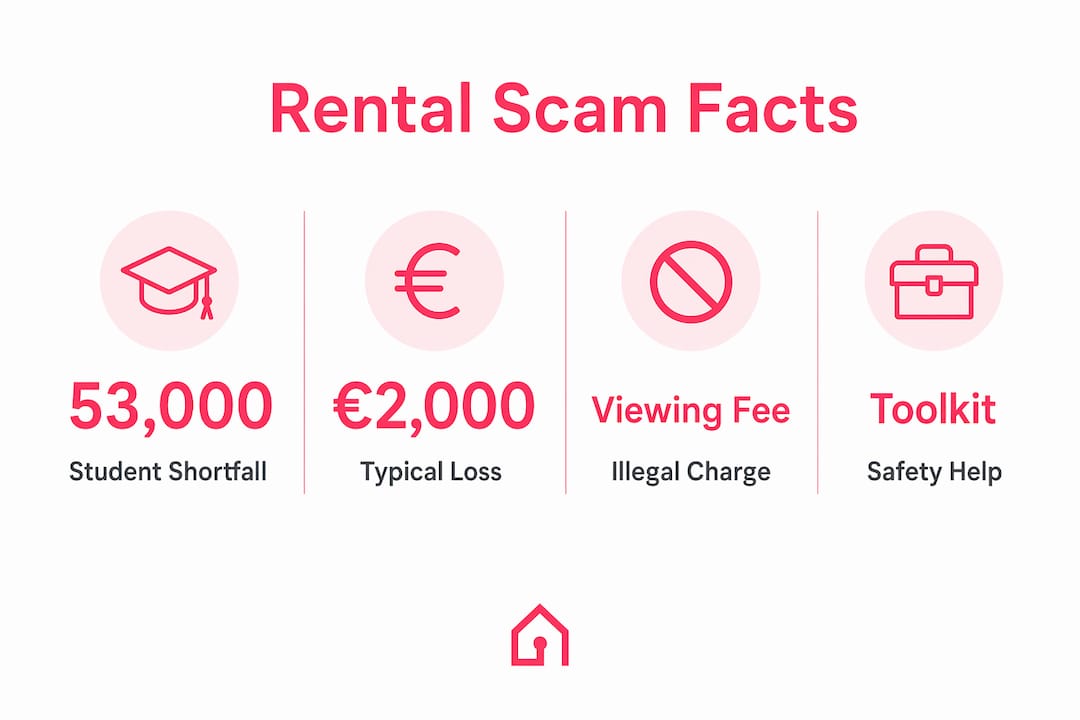
The scale of the shortfall is striking. There is a shortfall of 53,000 student bed spaces in the Dublin region alone, based on 2026 estimates. That figure means tens of thousands of students enter the market each year with almost no realistic chance of finding legitimate accommodation quickly.
"When renters know that up to 30 people may be competing for a single property, the pressure to act fast becomes overwhelming. Scammers use that pressure as their primary weapon, pushing victims to pay before they have time to think."
— Threshold and ICOS, Scamwatch 2026 Toolkit
This scarcity mindset is not irrational. It reflects the real conditions of the Dublin rental market. The problem is that it creates exactly the environment fraudsters need: a pool of anxious renters who are primed to pay quickly and ask questions later.
The pattern is consistent. A listing appears at a price slightly below market rate. It looks credible. You message immediately because you know others will too. The scammer replies fast, creates a sense of competition, and asks for a deposit before you can view the property. By the time you realise the listing was fake, the money is gone.
Related Topics
#why dublin renting is stressful#common rental scam types explained#common rental scam types ireland#rental fraud in Dublin#Dublin tenant rights#how to spot rental scams#Dublin rental market issues#impact of rental scams#why dublin has rental scams#protect yourself from rental fraud#common rental scams#avoiding rental scams in Dublin#why rental scams happen#Dublin housing scams#reasons for rental scams
Related Articles
What are the most common rental scam types in Dublin?
Rental fraud in Dublin follows several well-documented patterns. Knowing each one makes them far easier to spot.
Viewing deposit scams.No legitimate landlord or letting agent in Ireland charges a fee simply to view a property. Any request for payment before a viewing is a scam, without exception. An Garda Síochána identified a wave of these scams in april 2026, where fraudsters posted listings on legitimate property websites and requested deposits to "secure" a viewing slot.
Fake and hijacked listings.Criminals post fake ads on reputable platforms using stolen photographs, often taken from holiday let websites. The property exists, but the person advertising it has no connection to it whatsoever. Victims pay a deposit and arrive to find a confused homeowner or a locked door.
Landlord impersonation. Scammers pose as legitimate landlords, sometimes copying the details of real listings that have already been let. They conduct the entire process by message or email, avoiding any phone or video contact that might expose them.
Bank credential fraud. Rental scams frequently escalate beyond the initial deposit. Scams often escalate to secondary fraud where victims are contacted by someone posing as a bank official, using the rental enquiry as a pretext to extract account credentials or authorise fraudulent transfers.
The financial damage is real and immediate. In one case from june 2026, a victim lost nearly €2,000 to a scam using a holiday apartment as bait. The listing looked entirely credible, the communication was professional, and the victim had no reason to suspect fraud until the money had already left their account.
Pro Tip:If a listing uses photographs that look professionally styled for tourism rather than everyday living, run a reverse image search. Holiday let images are a common source for fake rental ads in Dublin.
Why are international renters and students especially at risk?
International renters and students face a specific disadvantage: they often cannot view a property in person before they need to commit. Scammers know this and target them deliberately.
Scammers exploit the inability of international renters to verify listings or conduct in-person viewings. A student arriving from abroad in september needs accommodation confirmed weeks in advance. A professional relocating from another country cannot fly to Dublin to view every shortlisted property. Fraudsters position themselves as the solution to that problem, offering to "hold" a property with a deposit paid remotely.
Several factors make these groups particularly vulnerable:
No local network. International renters lack friends or family in Dublin who can visit a property on their behalf or flag a suspicious landlord.
Unfamiliarity with Irish norms. Renters new to Ireland may not know that viewing fees are illegal, or that legitimate landlords do not request deposits before a viewing.
Time pressure. Students and new arrivals face hard deadlines tied to course start dates or job contracts, which increases the temptation to act without full verification.
Remote communication only. When all contact happens by email or messaging app, there is no opportunity to read body language or assess whether a person is genuine.
Threshold and the Irish Council for Overseas Students (ICOS) launched their Scamwatch 2026 toolkit specifically to address these vulnerabilities. The toolkit targets student unions and accommodation officers, giving them resources to educate incoming students before they arrive in Dublin and before they encounter a fraudster.
How can you spot and avoid rental scams in Dublin?
Avoiding rental fraud in Dublin requires a clear set of habits applied consistently. The red flags are well established, and the prevention steps are straightforward once you know them.
Never pay before viewing in person. Legitimate landlords never require payment before a physical viewing. If someone asks for a deposit, holding fee, or "admin charge" before you have set foot in the property, stop all contact immediately.
Pause before acting on urgency. Mary McHale, Head of Financial Crime at AIB, advises renters to "stop, wait a sec, and double-check" whenever they feel pressured to pay or share banking details. That pause is often the difference between losing money and keeping it.
Use video calls to verify remotely. If you genuinely cannot view a property in person, request a live video call with the landlord inside the property. A scammer using stolen photographs cannot show you around a property they do not control.
Check the listing against other sources. Search the property address on other platforms. If the same address appears at a different price or with a different landlord name, the listing may be hijacked. You can also check the Residential Tenancies Board (RTB) register to confirm whether a tenancy is registered.
Never share banking details over the phone or by message. Rental scams frequently escalate to bank fraud. A person claiming to be from your bank who contacts you after a rental enquiry is almost certainly a scammer using your enquiry as a pretext.
Report suspected scams immediately. Contact An Garda Síochána, your bank's fraud team, and Threshold if you suspect fraud or have already been defrauded. You can find guidance on what to do after a scam to help you act quickly and limit further damage.
Pro Tip:Before transferring any money, search the landlord's name and phone number together in Google. Scammers often reuse contact details across multiple fake listings, and victims sometimes post warnings online.
For a full checklist of safe practices, the safe online rental guide covers the key steps renters in Ireland should follow before making any payment.
Key takeaways
Rental fraud in Dublin is driven by extreme housing scarcity, which creates the urgency and desperation that scammers rely on to extract money from renters.
Point
Details
Scarcity fuels fraud
A shortfall of 53,000 student bed spaces in Dublin creates the pressure scammers exploit.
Viewing fees are always a scam
No legitimate landlord in Ireland charges a fee to view a property.
International renters are primary targets
Inability to view properties in person makes remote renters especially vulnerable to fake listings.
Pause before paying
Stopping to verify before transferring money is the single most effective defence against rental fraud.
Escalation risk is real
Rental scams frequently lead to secondary bank fraud, putting your accounts at risk beyond the initial deposit.
Renting in Dublin: what the scam problem really tells us
The volume of rental scams in Dublin is not a technology problem or a policing failure. It is a symptom of a market that has been broken by undersupply for years. When demand so dramatically outstrips supply, the conditions for fraud become almost ideal. Scammers do not create the desperation; they simply find it and use it.
What concerns me most, having watched this market closely, is how normalised the stress of renting in Dublin has become. Renters accept that they might lose a deposit. They accept that landlords might ghost them. They accept that a listing might disappear before they can respond. That acceptance is dangerous because it lowers the threshold for what feels suspicious. When everything feels slightly chaotic, a scam can look like just another frustrating part of the process.
The most important shift renters can make is treating every payment request with the same scepticism they would apply to a cold call asking for their bank details. The context feels different because you initiated the contact and you want the property. But the risk is identical. Scammers count on the emotional investment you have already made in a listing to override your judgement.
Organisations like Threshold and An Garda Síochána are doing critical work in raising awareness, but the burden of protection still falls disproportionately on individual renters. Until the supply problem is addressed at a structural level, the best defence is knowledge, patience, and a willingness to walk away from anything that feels rushed.
— Hauzed
Safer renting starts with verified listings
Renting in Dublin does not have to mean navigating anonymous listings and unverified landlords alone. Hauzed is a trust-first rental marketplace built for Ireland, connecting renters with verified landlords and giving both sides a safer, more organised process.
On Hauzed, renters can build a verified profile, search properties, and connect with landlords through a platform designed to reduce the anonymous, scam-prone channels that make Dublin renting so stressful. Landlords and agencies benefit from verified tenant interest and AI-assisted matching, so the process is faster and more reliable for everyone. If you are looking for a safer way to rent in Dublin or across Ireland, Hauzed gives you a starting point built on verification rather than guesswork. You can also browse rental properties on the platform to see what verified listings look like in practice.
FAQ
Why does Dublin have so many rental scams?
Dublin has a severe shortage of rental properties, with a shortfall of 53,000 student bed spaces alone. That scarcity forces renters to act quickly, which scammers exploit by creating urgency and demanding deposits before viewings.
Is it legal for a landlord to charge a viewing fee in Ireland?
No. No legitimate landlord or letting agent in Ireland charges a fee to view a property. Any such request is a scam red flag and should be reported to An Garda Síochána.
How can I verify a rental listing is genuine?
Request a live video call inside the property, check the address across multiple platforms, and search the landlord's contact details online. You can also check the RTB register to confirm whether a tenancy is legitimately registered.
What should I do if I have already been scammed?
Contact your bank's fraud team immediately to attempt to reverse the transfer, then report the incident to An Garda Síochána and Threshold. Acting within the first few hours gives you the best chance of recovering funds.
Are international renters more at risk of rental fraud in Dublin?
Yes. International renters cannot easily view properties in person, which makes it harder to verify listings. Scammers specifically target this group using stolen holiday let photographs and remote-only communication to avoid detection.