Stop Covering a Roommate's Rent: 6 Joint Tenancy Steps in Ireland
6 September 2026
9 min read
Understand joint tenancy in Ireland, RTB and Threshold rights, and six actions to avoid full liability for a co tenant's unpaid rent.
In Ireland, a joint tenancy means everyone named on one tenancy agreement is legally responsible for the whole rent and every obligation attached to it, not just their own share. If one person stops paying, the others can be pursued for the full amount, a situation similarly examined in the context of joint tenancy severance in other jurisdictions like NSW in this estate dispute guide. The written agreement and its registration with the Residential Tenancies Board are your strongest protection when disputes arise.
TL;DR:
Tenants in Ireland are jointly and severally liable for the entire rent and obligations under a joint tenancy, meaning any unpaid rent by one can be recovered from others.
Proper documentation such as RTB agreement templates, registration confirmation, move-in photos, and payment records are crucial to protect household members and facilitate dispute resolution.
If a tenant leaves or stops paying, the tenancy usually continues for remaining tenants unless the landlord approves a replacement or terminates the agreement through formal procedures.
Landlords must serve correct notices and obtain written consent for replacements to avoid invalid termination claims; procedural compliance is key in disputes.
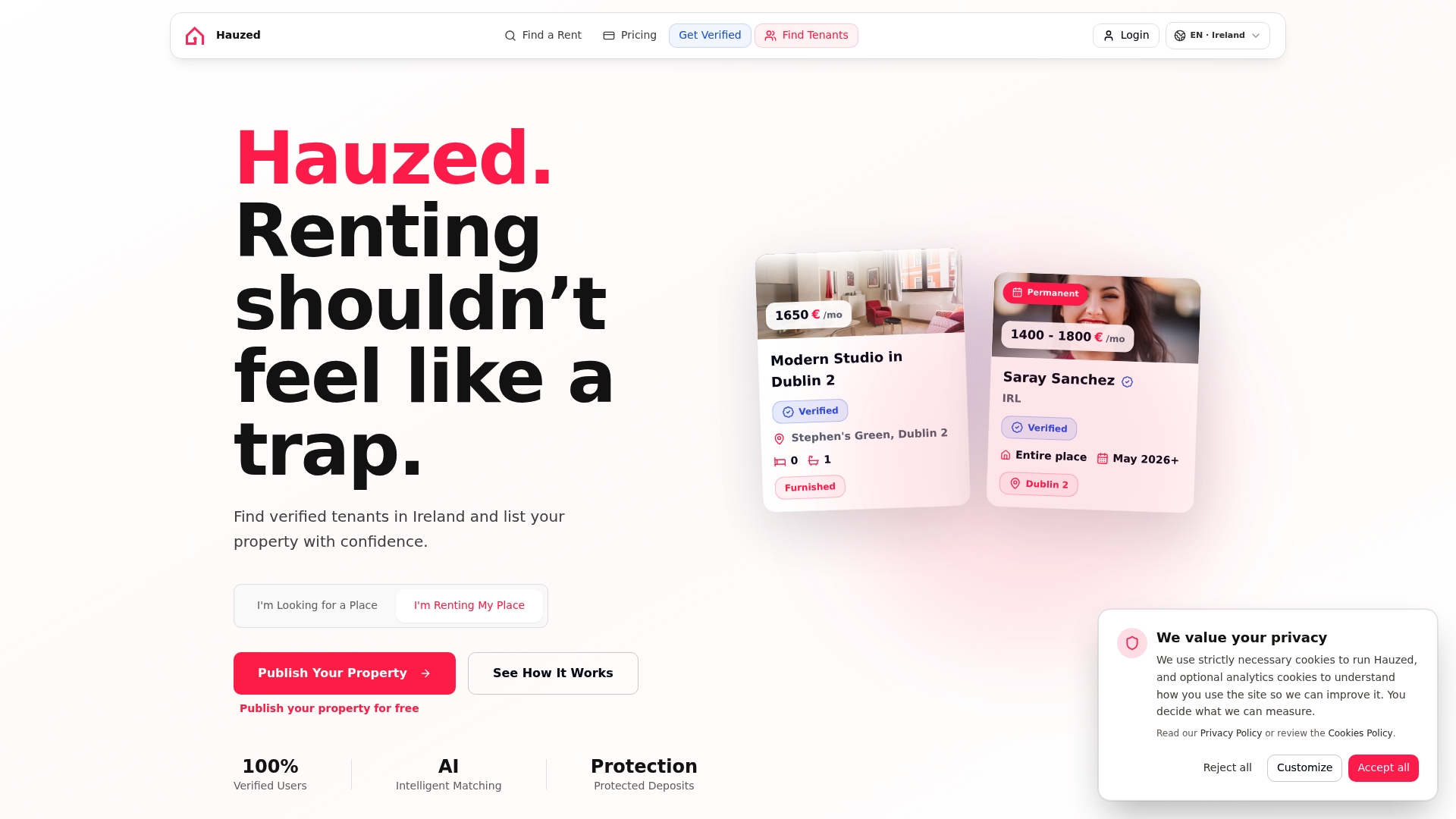
Using verified platforms like Hauzed can streamline group applications and management, reducing errors and conflicts before tenancy agreements are signed.
What is joint tenancy in Ireland, and what does it mean for liability?
When you and your housemates sign the same tenancy agreement and share exclusive occupation of the property, you're almost certainly in a jointly and severally liable tenancy. That's the legal term for what most people simply call a joint tenancy, and it matters more than people realise: it means the household is treated as one tenancy, not a bundle of individual arrangements, according to Threshold.
Here's the practical bite: if your co-tenant skips town owing rent, your landlord can legally come after you or any other named tenant for the full outstanding amount, not just your share. The Residential Tenancies Board doesn't register individual tenants. It registers the tenancy itself as a single unit, which is why your written agreement (not a verbal understanding between housemates) is what actually protects you.
This is very different from a licence arrangement, where you rent a room from a resident landlord with far fewer statutory protections. Key distinctions worth knowing:
A joint tenancy gives every named tenant full rights under the Residential Tenancies Act, including notice periods and dispute access.
A licence arrangement typically offers none of that, since the resident landlord exemption removes most RTB coverage.
Joint tenants share liability for the entire tenancy, whereas a licensee usually only answers for their own arrangement with the landlord.
Practical checklist before you sign a joint tenancy
Before anyone signs anything, run through this list together as a household:
Get everyone's name on the RTB tenancy template. The RTB's agreement template is free, standard, and becomes your primary evidence if a dispute ever lands in adjudication.
Confirm the tenancy is registered with the RTB. Ask the landlord to confirm registration, don't assume it's happened.
Document the deposit clearly. Note who paid what, and get a receipt naming every contributor.
Agree how bills will be split, in writing. A one-page form signed by all tenants avoids months of awkward group chats later.
Photograph the property's condition on move-in day. Timestamped photos are worth more than memory in six months' time.
Keep every payment record. Bank transfers, standing order confirmations, receipts. All of it.
Pro Tip:Set up a shared folder (Google Drive or similar) on day one for the tenancy agreement, deposit receipts, and bill splits. When someone moves out eighteen months later and nobody remembers who paid the January electricity bill, that folder settles the argument in seconds.
A departing tenant doesn't automatically end the tenancy for everyone else. The tenancy usually continues, and the remaining tenants stay liable for the full rent unless the landlord formally agrees to a replacement, according to guidance on RTB rules for tenant replacement.
There's an important legal distinction between three routes:
Replacement by agreement: the landlord consents, a new person is added, and the same tenancy continues with the same rent and protections intact.
Assignment or subletting: requires explicit landlord consent under the tenancy agreement; doing this without permission can breach the lease.
A genuinely new tenancy: only arises if the landlord chooses to end the old one and start fresh, which can allow a rent reset.
Under Section 23 of the Residential Tenancies Act 2004, landlords can recover rent arrears from whoever occupied the dwelling when those arrears built up. That's a real risk for remaining tenants who absorb a departing housemate's unpaid rent without a written agreement showing who owed what.
If a co-tenant stops paying, act fast: gather bank statements, texts, and any written bill-split agreement, then approach the RTB's dispute resolution service if the household can't resolve it directly. Adjudication decisions typically favour whoever brought the clearest paper trail.
Managing bills, utilities and the deposit in a joint tenancy
Utility providers chase whoever's name sits on the account, regardless of what your household agreed privately. That's why a written bills-sharing form, signed by everyone, matters more than people assume.
A workable system looks like this:
Put one person's name on each utility account, or split accounts evenly across tenants.
Log every payment in a shared spreadsheet with dates and amounts.
Photograph meter readings and the property's condition on move-in day.
Keep every deposit receipt naming who contributed what.
For the deposit itself, a move-in inventory with photos and a written receipt is your best defence if a landlord disputes damage later. If a dispute does arise, RTB adjudication is the formal route, but you'll need documentation to back your claim. Our piece on how deposit returns work in Ireland walks through the timeline in more detail.
Pro Tip:A signed bills form costs nothing and takes ten minutes, but it's the single cheapest way to keep a housemate dispute from ever reaching RTB adjudication.
What landlords should do when managing a joint tenancy
Landlords carry their own obligations, and getting them wrong risks an invalid termination. Notice periods and valid reasons for ending a tenancy are set out in RTB guidance, and since 1 March 2026, notice filing requirements have changed, with different rules depending on landlord size.
Practical points every landlord managing a shared house should follow:
Confirm the valid reason for termination and serve the correct notice period before filing anything.
File the Notice of Termination with the RTB as required under the updated rules.
When a tenant proposes a replacement, get written consent from all parties rather than allowing an informal handover.
Only treat a change as a genuinely new tenancy (with a possible rent reset) if the old tenancy is formally ended, not just amended by swapping one name for another.
Keep dated records of every notice, consent, and communication with tenants.
Skipping these steps is how landlords end up losing a legitimate termination case at adjudication purely on a procedural technicality.
How Hauzed helps groups apply and landlords manage joint tenancies safely
Coordinating a group application through scattered WhatsApp messages and half-finished Google Forms is exactly where joint tenancies start to go wrong before they've even begun.
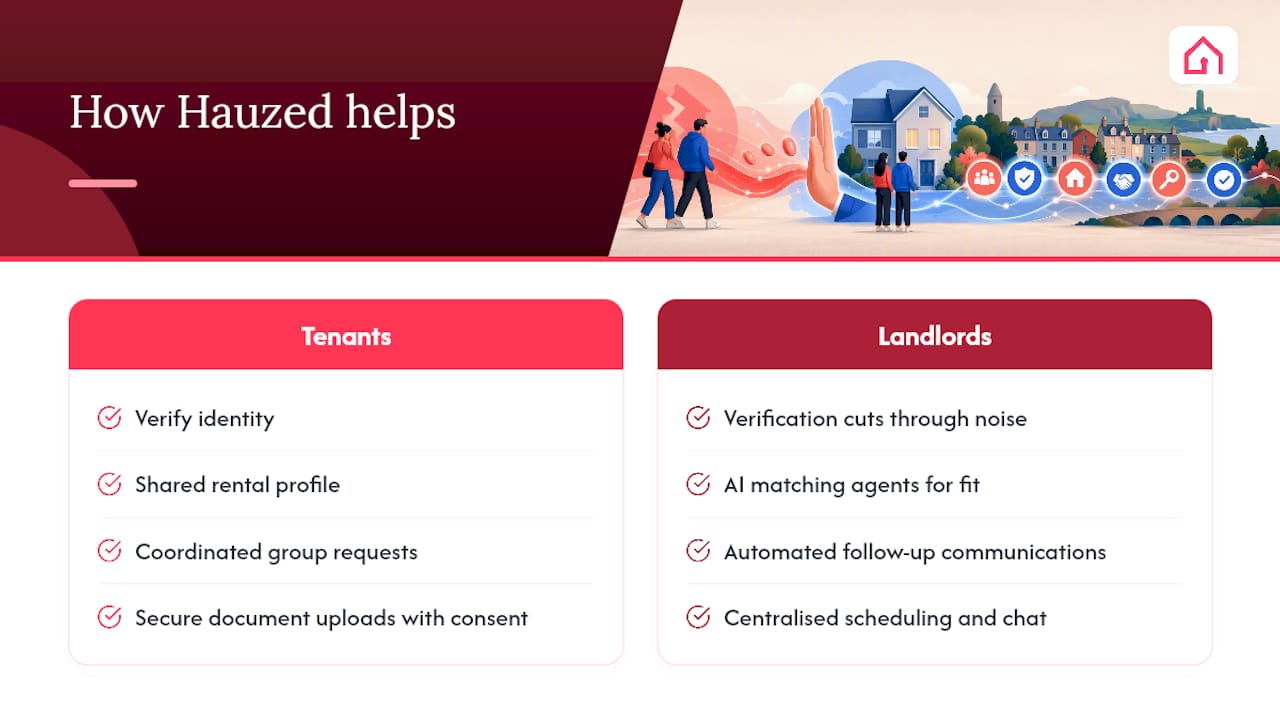
There are platforms built to help groups of renters apply together as one serious household, without applications getting lost among dozens of anonymous messages. Tenants can verify their identity, build a shared rental profile, and send group requests to landlords as a coordinated unit rather than four separate strangers messaging separately. Supporting documents go through secure upload flows with consent, never loose attachments in a chat thread.
For landlords and agencies managing shared lets, verification processes can cut through the noise. AI matching agents may help identify tenant groups who genuinely fit the property and handle follow-up communications so nothing sits unanswered for days. Scheduling and chat tools that stay in one place can help when coordinating viewing times across multiple different work schedules.
If you're arranging a shared rental in Dublin or elsewhere in Ireland, Hauzed's rental marketplace is worth a look before you go back to the group chat.
Final checklist: six actions to take right now
Whether you're a tenant moving into a shared house or a landlord letting to a group, six things separate the households that sail through from the ones that end up in a dispute.
Use the RTB tenancy template and confirm the tenancy is registered before anyone hands over a deposit. Agree bill splits and deposit contributions in writing, signed by everyone, on day one, not after the first disagreement. Photograph the property's condition and keep every payment receipt somewhere all tenants can access. The moment someone's circumstances change, whether they're moving out or falling behind on rent, tell your co-tenants and landlord immediately rather than letting it drift. Any replacement tenant needs agreement from the landlord in writing, not a quiet handover of keys. And if a dispute genuinely can't be resolved between the household, RTB adjudication exists precisely for this, provided you've kept the paperwork to support your case.
What is joint tenancy in an Irish rental agreement?
It's when two or more people sign one tenancy agreement together and share exclusive occupation of the property, making each of them jointly and severally liable for the full rent, according to Threshold.
Can I be held liable for a co-tenant's unpaid rent?
Yes. Under Section 23 of the Residential Tenancies Act 2004, landlords can recover arrears from anyone who occupied the dwelling while that debt built up, including remaining tenants.
Does a joint tenancy end when one tenant moves out?
No, the tenancy typically continues for the remaining tenants unless the landlord agrees to a replacement or formally ends the existing tenancy, per RTB guidance on tenant replacement.
How do I apply for a joint tenancy as a group in Ireland?
Use the RTB's standard agreement template, confirm registration, and consider a verified platform like Hauzed to coordinate a group application with a single, stronger household profile.
What should I do if a tenancy dispute can't be resolved between housemates?
Gather your written agreement, payment records, and any bill-splitting form, then bring the case to RTB dispute resolution for adjudication.