Learn how to manage multiple rental properties online effectively. Discover tools that streamline rent collection and save you money in 2026.
Managing multiple rental properties online is the process of using digital tools and systems to handle rent collection, tenant communication, maintenance scheduling, and compliance tracking across your entire portfolio from one place. Done well, it replaces scattered spreadsheets, missed deadlines, and inbox chaos with a structured, repeatable workflow. UK landlords who switch to property management software save approximately £768 per property annually. That figure means a five-property portfolio could recover over £3,000 a year compared with manual management. With the Renters' Rights Act introducing new obligations from 1 may 2026, the case for moving your portfolio online has never been stronger.
What tools do you need to manage multiple rental properties online?
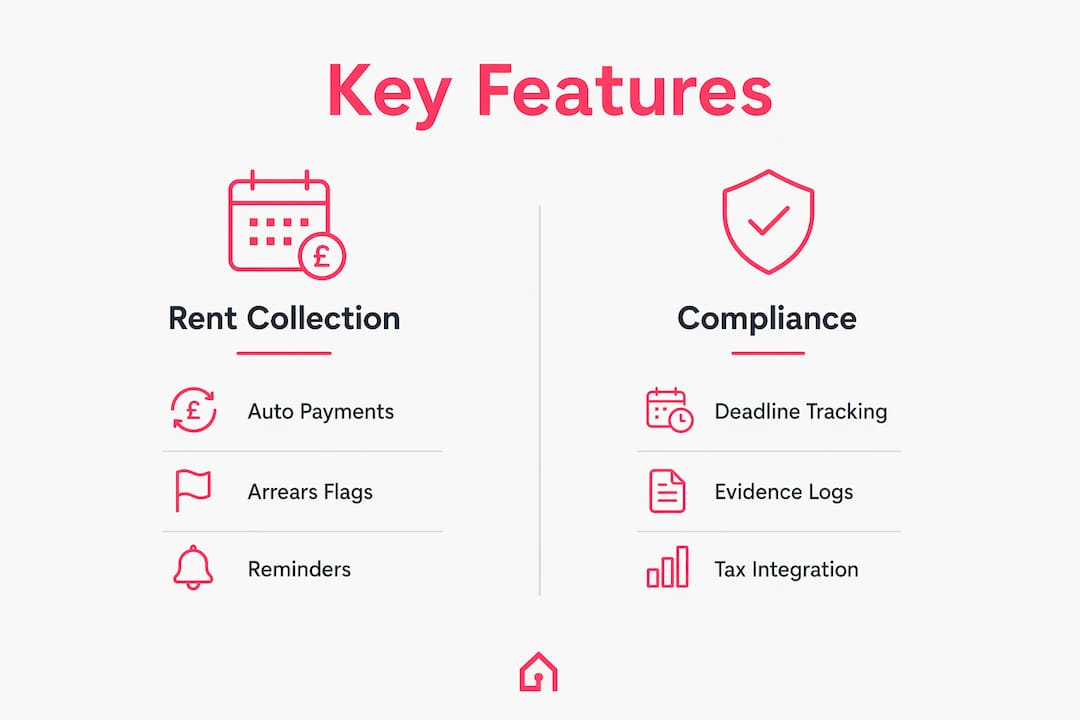
The right software does far more than collect rent. A capable property management platform covers five core functions: rent collection and arrears tracking, maintenance request logging, tenant communication, document storage, and compliance deadline monitoring. Each function removes a category of manual work from your week.
Software with bank feed integration reduces reconciliation time significantly and supports Making Tax Digital compliance, which matters if you file self-assessment returns. Tenant portals add another layer of efficiency. When tenants log maintenance requests directly into a portal, you get a timestamped record without a single phone call.
The table below compares the feature categories worth evaluating when choosing a platform. It uses generic labels rather than brand names because the right fit depends on your portfolio size and workflow.
Feature category
What to look for
Rent collection
Automated payment reminders, arrears flags, bank feed sync
Related Topics
#manage multiple rental properties online#tips for managing rental properties#how to manage rentals remotely#streamline rental process online#multiple property management software#automate property management tasks#best apps for rental management#online property management tools
Related Articles
Maintenance management
Tenant-facing request portal, contractor assignment, status tracking
Compliance tracking
Deadline alerts for Gas Safety, EICR, EPC, and tenancy documents
Document storage
Secure upload, version history, and audit-ready access
Tenant communication
Templated messaging, in-app chat, and automated follow-up
Compliance tracking deserves particular attention in 2026. From 1 may 2026, landlords must serve the Renters' Rights Act Information Sheet to tenants, and failure to do so risks possession claims being dismissed. A platform that logs and timestamps document service gives you a defensible record if a dispute arises.
Dedicated compliance evidence tools go further than standard operational platforms. Operational platforms track deadlines but generally cannot produce court-formatted Compliance Defence Packs quickly. Specialised tools use cryptographic hashing and timestamping to create tamper-evident records. That distinction matters when a Rent Repayment Order is on the table.
Pro Tip:Pilot your chosen software with a single property before migrating your full portfolio. Testing rent collection and messaging on one unit first reveals workflow gaps without disrupting your entire operation.
How do you set up an online system for your rental portfolio?
Organisation at the setup stage saves you hours every month. The most common mistake landlords make is importing all properties at once without a clear naming structure, which creates confusion in reports and reconciliations later. Standardising property naming conventions from day one prevents aggregate data confusion and keeps your records clean as the portfolio grows.
Follow these steps to build a solid foundation:
Create a consistent naming convention. Use a format such as "Street Name, Unit Number, Postcode" for every property. Apply it without exception so reports and filters work correctly.
Import one property first. Verify that rent schedules, tenant details, and compliance dates appear correctly before adding the rest.
Cluster compliance deadlines by geography. Group Gas Safety certificates, Electrical Installation Condition Reports (EICRs), and insurance renewals for properties in the same postcode into the same calendar month. Compliance clustering by postcode can yield 10–20% bulk discounts on tradespeople fees.
Set up automated recurring tasks. Schedule rent reminders, inspection notices, and tenancy renewal prompts inside the platform so nothing relies on your memory.
Centralise tenant communication. Route all tenant messages through the platform rather than personal email or WhatsApp. This creates a searchable record and protects your private contact details.
Maintain property-level financial records. Avoid tracking income and expenditure at portfolio level only. Each property needs its own profit and loss view for accurate tax reporting.
The payoff from this setup is measurable. Landlords using software spend roughly 1–2 hours per property each month on management tasks. For a five-property portfolio, that represents a recovery of around 8.5 hours monthly compared with manual methods.
What challenges do landlords face when managing properties online?
Moving your portfolio online solves many problems but introduces a few new ones if you are not careful. The most common pitfalls are organisational rather than technical.
Aggregate data confusion. Viewing portfolio-wide totals without property-level breakdowns makes it impossible to spot which unit is underperforming or which tenant is in arrears.
Mistaking reminders for proof. A software reminder that a Gas Safety certificate is due is not evidence that the certificate was served. Landlords who rely on operational reminders as legal proof risk compliance failures under the Renters' Rights Act 2026.
Skipping manual cross-checks. Automated systems can have data entry errors. A quarterly manual review of compliance dates against physical certificates catches discrepancies before they become legal problems.
Over-consolidating tenant communication. Merging all tenant threads into one inbox without property-level filters creates the same chaos you were trying to escape. Use tags or folders to separate conversations by property.
Delaying the pilot phase. Migrating all properties at once without testing the platform first is the single fastest way to create data chaos.
Pro Tip:Create a tamper-evident audit trail for every compliance action. Timestamped, tamper-proof records are your primary defence against expanded Rent Repayment Orders, which can now reach up to two years' rent for certain offences.
The broader principle here is that self-management is less about legal expertise and more about maintaining disciplined, rigorous processes supported by software. The technology does not replace good habits. It makes good habits easier to sustain at scale.
How do you improve tenant communication across multiple properties?
Tenant communication is the area where landlords lose the most time when managing several properties. The fix is not working faster. It is building systems that handle routine messages without your direct involvement.
Effective communication workflows for multi-property landlords include:
Automated messaging templates. Draft standard replies for rent reminders, maintenance updates, inspection notices, and tenancy renewal prompts. Set them to send on a schedule so tenants receive timely updates without you writing each message manually.
Online maintenance portals. When tenants submit requests through a portal rather than by text or phone, you get a logged, timestamped record. You can assign the job to a contractor, update the status, and close the ticket, all within the same system.
Contractor coordination by cluster. Properties in the same postcode can share contractor visits. Grouping properties by postcode allows bulk bookings with engineers and insurers, cutting both costs and scheduling time significantly.
Transparent progress updates. Tenants who can see the status of their maintenance request in a portal are less likely to send chasing messages. Fewer inbound messages means less time spent on reactive communication.
Scheduled check-in messages. A brief automated message at the start of each tenancy and before each inspection shows tenants you are organised and attentive. It sets a professional tone that reduces friction throughout the tenancy.
The goal is a tenant experience that feels responsive without requiring you to be constantly available. When a tenant in one property submits a boiler fault at 11 PM, an automated acknowledgement and a next-morning contractor assignment keeps the situation calm without pulling you out of your evening.
Key takeaways
Managing multiple rental properties online works best when you combine the right software with disciplined organisation, property-level record-keeping, and tamper-evident compliance evidence.
Point
Details
Software saves real money
UK landlords save approximately £768 per property annually by switching from manual to digital management.
Pilot before full migration
Test your chosen platform on one property first to avoid data chaos across your whole portfolio.
Compliance evidence is not optional
Operational reminders do not constitute legal proof; use timestamped, tamper-evident records for every compliance action.
Cluster properties geographically
Aligning compliance deadlines by postcode can yield 10–20% bulk discounts on contractor and engineer fees.
Centralise all communication
Routing tenant messages through one platform protects your privacy and creates a searchable, auditable record.
Hauzed's view: what landlords get wrong about going digital
Most landlords approach digital management as a filing upgrade. They move their spreadsheets into software and expect the hard work to disappear. That is not quite how it works, and the gap between expectation and reality is where portfolios get into trouble.
The landlords who get the most from online tools are the ones who treat the setup phase seriously. They define naming conventions before importing a single property. They test the platform on one unit for a full rent cycle before trusting it with five or ten. They separate their operational workflow tool from their compliance evidence tool, because those are genuinely different jobs. Understanding how landlord-tenant law works in 2026 makes it much clearer why that separation matters.
The 2026 regulatory environment has also changed the stakes. A Rent Repayment Order penalty that can reach two years' rent is not a theoretical risk. It is a real financial exposure that a software reminder notification does not protect you against. The landlords who understand this distinction are the ones building proper audit trails, not just ticking boxes in a dashboard.
The other thing worth saying plainly: the transition from four properties to fifteen is where manual systems reliably break down. If you are managing three properties comfortably on spreadsheets, you may feel no urgency to change. But the moment you add a fourth or fifth, the complexity compounds faster than most landlords expect. Starting the digital transition one property earlier than you think you need to is almost always the right call.
Going digital is not about replacing your judgement. It is about giving your judgement better information to work with, faster and with less friction. That is the version of property management that actually scales.
— Hauzed
Hauzed: a safer way to manage your rental properties online
Managing a rental portfolio online becomes significantly easier when the tenant side of the process is organised too. Hauzed is a trust-first rental marketplace built for Ireland, connecting verified tenants with landlords and agencies through a structured, scam-resistant workflow.
For landlords, Hauzed reduces the manual work that consumes the most time: filtering leads, replying to messages, matching tenants, scheduling visits, and managing conversations. AI agents including Hauzer for tenant matching and Echo for chat follow-up handle routine tasks so you can focus on decisions that actually need your attention. Agencies can use bulk publishing and team workflows to manage larger portfolios without rebuilding processes property by property. If you are ready to rent properties with less chaos, Hauzed gives you a more organised starting point. You can also explore safe online rental practices to complement your digital management setup.
FAQ
How much can I save by managing rental properties online?
UK landlords switching from manual methods to property management software save approximately £768 per property annually. A five-property portfolio can recover over £3,000 per year compared with spreadsheet-based management.
What is the Renters' Rights Act requirement from may 2026?
From 1 may 2026, landlords must serve the Renters' Rights Act Information Sheet to tenants. Failure to do so risks possession claims being dismissed and exposes landlords to Rent Repayment Orders of up to two years' rent.
How do I avoid data confusion when managing multiple properties online?
Standardise your property naming conventions before importing any data, and maintain separate financial records for each property. Aggregate tracking without property-level detail creates reconciliation errors and obscures underperforming units.
Is a software reminder enough to prove compliance?
No. Operational software tracks deadlines but does not produce court-ready compliance evidence. You need timestamped, tamper-evident records of document service to defend against a Rent Repayment Order claim.
How many hours does online property management save each month?
Landlords using property management software spend roughly 1–2 hours per property monthly on management tasks. For a five-property portfolio, that represents a recovery of approximately 8.5 hours per month compared with manual management.