Master the rental application process explained in this 2026 guide. Prepare documents, pass checks, and secure your dream home efficiently!
The rental application process is the formal sequence of steps a prospective tenant must complete to secure a tenancy legally and successfully. It covers everything from gathering your documents to passing referencing checks and signing a tenancy agreement. Understanding each stage puts you in control. Tenants who prepare thoroughly move faster, avoid common delays, and make a stronger impression on landlords and agents. This guide walks you through the full rental application step by step, with the legal requirements, document checklist, and practical advice you need for 2026.
What are the main steps in the rental application process?
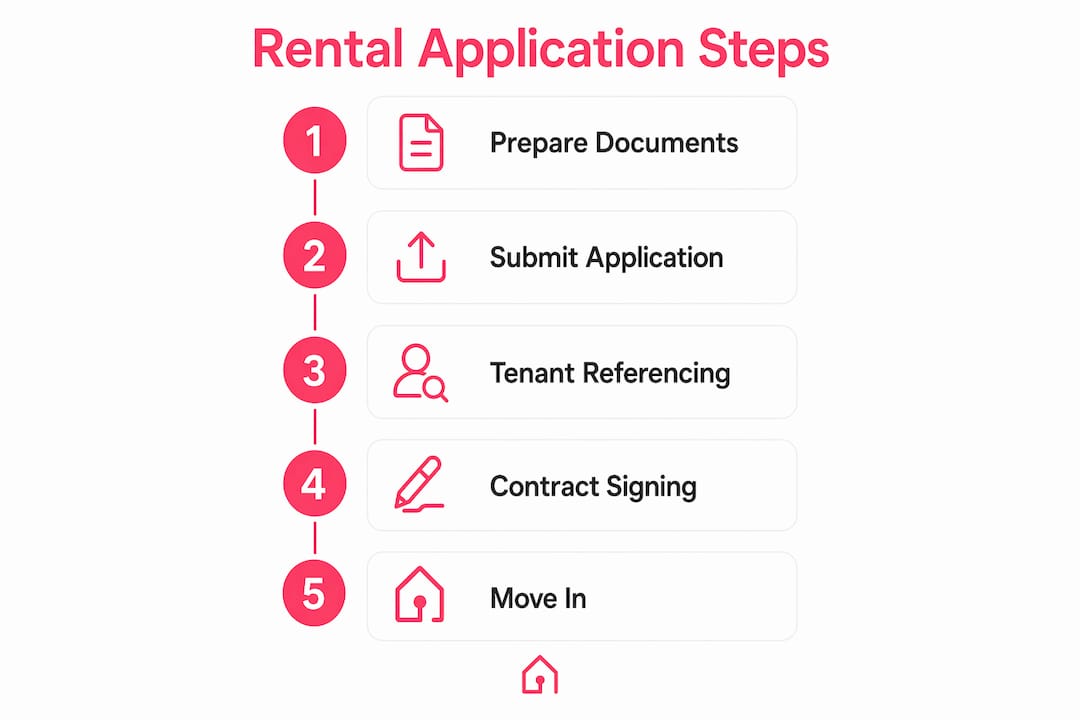
The rental application process follows a clear sequence. Knowing the order helps you prepare each stage before it arrives, rather than scrambling when a landlord asks for something you have not yet gathered.
Prepare your documents. Collect your photo ID, proof of address, income evidence, and reference contacts before you start viewing properties. Having everything ready means you can submit quickly when you find the right home.
Express interest and pay a holding deposit. Once a landlord or agent accepts your interest, you may be asked to pay a holding deposit. Under the Tenant Fees Act 2019, this is capped at one week's rent. It reserves the property while referencing takes place.
Complete referencing checks. The landlord or agent will verify your identity, credit history, employment, income, and previous tenancy record. Referencing typically completes in 2–5 working days, though delays caused by unresponsive employers can extend this.
Pass the Right to Rent check. Landlords in England must confirm your legal right to rent before the tenancy begins. From 1 october 2026, the Home Office Landlord Checking Service will return a yes or no response within two working days.
Sign the tenancy agreement. Once checks are passed, you and the landlord sign a formal tenancy agreement. Review every clause carefully before signing. The include rent amount, deposit terms, notice periods, and permitted alterations.
Related Topics
#rental application checklist 2026#how shared rental applications work#rental application step by step#common rental application questions#what to include in rental application#understanding rental applications#rental application steps#tips for rental application#rental application process explained#rental approval process explained#how to apply for rental#rental application guide
The full process, from application to contract signing, typically takes 1–2 weeks for a vacant property and 3–4 weeks if the current tenant is still in residence.
Pro Tip:Alert your employer and previous landlord that a reference request is coming. A single unresponsive contact is the most common cause of application delays.
What documents do you need for a rental application?
Landlords and agents need to verify who you are, where you live, and whether you can afford the rent. Preparing the right documents in advance is the single most effective thing you can do to speed up your application.
Photo ID. A valid passport or driving licence is standard. Some agents accept a national identity card for EU nationals.
Proof of address. A utility bill, bank statement, or council tax letter dated within the last three months. The name and address must match your ID exactly.
Income evidence. Employed applicants typically provide three months of payslips and a recent bank statement. Self-employed applicants should prepare two years of tax returns or SA302 forms from HMRC.
Previous landlord reference. A statement from your most recent landlord confirming you paid rent on time and left the property in good condition. First-time renters can use a tutor or workplace supervisor instead of a personal friend.
Tenant CV or offer letter. A one-page document summarising your employment, income, move-in date, and a brief personal statement. A well-prepared Tenant CV helps landlords assess your suitability quickly in a competitive market.
Pro Tip:Create a single digital folder with all your documents saved as PDFs. You can share it instantly when an agent asks, and it signals that you are organised and serious.
Common pitfalls include mismatched names across documents, bank statements that do not clearly show salary credits, and utility bills that are more than three months old. Check every document for consistency before you submit.
How does tenant referencing work?
Tenant referencing is the process landlords use to verify that you are who you say you are and that you can afford the tenancy. It is not a black-box score. Referencing involves identity, Right to Rent, credit, employment, and landlord checks, each serving a distinct purpose.
Check type
What it verifies
Typical outcome
Identity check
Confirms your name and date of birth against official ID
Pass or refer
Credit check
Reviews payment history, CCJs, and outstanding debt
Pass, refer, or fail
Employment check
Confirms salary and contract type with your employer
Pass or refer
Landlord reference
Confirms rent payment history and conduct
Pass or refer
Right to Rent
Confirms legal entitlement to rent in England
Pass or fail
A common misconception is that any credit issue automatically disqualifies you. A single satisfied County Court Judgment older than three years is generally acceptable. What matters more is the pattern of your financial behaviour, not a single historic event.
If your income falls below the affordability threshold, typically 2.5 times the annual rent, a guarantor can support your application. Guarantor agreements must be formally written, specifying the scope and limits of the guarantor's obligations. A verbal agreement carries no legal weight.
The Renters' Rights Act 2025 has made referencing more important than ever. Thorough referencing is now landlords' primary tool to protect against long-term rent arrears, because recovering possession without fault has become significantly harder. You should expect landlords to scrutinise your application more carefully than they might have done in previous years.
Pro Tip:If you have a referencing red flag, such as a gap in employment or a previous missed payment, address it proactively. Write a short explanatory note and attach supporting evidence. Agents respond well to transparency.
What legal requirements and fee restrictions apply?
The Tenant Fees Act 2019 defines exactly what landlords and agents can and cannot charge you during the application process. Knowing these rules protects you from paying fees that are simply not lawful.
Permitted charges include:
Refundable holding deposit, capped at one week's rent
Tenancy deposit, capped at five weeks' rent where annual rent is below £50,000
Rent payments as agreed in the tenancy
Charges for lost keys or late rent, where specified in the agreement
Fees that are prohibited under the Act include:
Administration or referencing fees
Viewing fees
Check-in or check-out fees charged to the tenant
Any fee not explicitly permitted by the Act
If a landlord charges a prohibited fee, they commit a civil offence. You can report it to your local Trading Standards office or apply to a First-tier Tribunal for a refund.
Your holding deposit must be refunded in full if the landlord withdraws the property, or if you are offered and accept the tenancy. The landlord can retain it only if you provide false information, fail the Right to Rent check, or withdraw your application without good reason.
The Right to Rent check is a legal requirement for all new tenancies in England. From 1 october 2026, landlords using the Home Office Landlord Checking Service will receive a clear yes or no decision within two working days. This check must be completed before the tenancy agreement is signed. Landlords who skip it face significant financial penalties.
How do you improve your chances of a successful application?
A strong application is not just about having the right documents. It is about presenting them clearly, responding quickly, and communicating honestly with the landlord or agent.
Prepare everything before you start viewing. Agents move fast in competitive markets. If you need three days to gather documents after finding a property, another applicant may secure it first.
Be upfront about any irregularities.Tenants who disclose potential issues early and provide context often improve their approval odds despite minor red flags. Hiding a problem and having it discovered during referencing is far more damaging than explaining it in advance.
Respond to referencing requests within 24 hours. Delays on your side slow the entire process. Agents interpret slow responses as low commitment.
Prepare a Tenant CV. A one-page summary of your employment, income, move-in date, and personal statement gives the landlord a clear picture before referencing even begins. Well-prepared applicants who organise a Tenant CV can shorten the application timeline and reduce the risk of delays.
Confirm your references are reachable. The most common application failures are administrative: employers who do not respond to reference requests, or bank statements that do not clearly show salary credits. A quick message to your HR contact before you apply can prevent this entirely.
Meet the affordability threshold. Most landlords require your gross income to be at least 2.5 times the annual rent. If you are close to the threshold, consider whether a guarantor or a joint application with a co-tenant would strengthen your position. For group applications, understanding how shared rental applications work helps you coordinate documents across multiple applicants without confusion.
Key takeaways
A successful rental application depends on preparation, transparency, and speed at every stage of the process.
Point
Details
Prepare documents early
Gather ID, proof of address, income evidence, and references before viewing properties.
Know your legal rights
The Tenant Fees Act 2019 prohibits admin and viewing fees; holding deposits are capped at one week's rent.
Referencing is a fact-check
Credit, employment, and landlord checks assess suitability; a single old CCJ does not automatically disqualify you.
Transparency speeds approval
Disclosing red flags with context and evidence improves your chances more than staying silent.
A Tenant CV makes you stand out
A one-page professional summary helps landlords assess you quickly in a competitive market.
What we have learned from watching applications succeed and fail
The rental application process looks straightforward on paper. In practice, the gap between a successful application and a failed one almost always comes down to preparation and communication, not financial strength.
The applicants who struggle are rarely the ones with the weakest finances. They are the ones who send incomplete documents, take three days to respond to a referencing request, or say nothing about a credit issue and hope it goes unnoticed. Referencing agents see hundreds of applications. They notice when something is missing, and they notice when an applicant has clearly thought ahead.
What I have seen work consistently is this: treat the application like a professional submission, not a casual enquiry. A Tenant CV, a pre-warned employer, and a short honest note about any credit history issue will put you ahead of most applicants in the same pool.
The Renters' Rights Act 2025 has also shifted the dynamic. Landlords now scrutinise applications more carefully because recovering a property from a non-paying tenant is harder. That is not a reason to feel anxious. It is a reason to present yourself clearly and completely from the start. The landlords and agents who use verified platforms like Hauzed are specifically looking for tenants who have already taken that step.
— Hauzed
A safer way to start your rental search
Preparing a strong application is only half the challenge. Finding a trustworthy property to apply for is the other half.
Hauzed is a trust-first rental marketplace built for Ireland, starting with Dublin. Tenants can search verified rental listings, build a stronger rental profile, verify their identity, and connect with landlords through a single organised platform. There are no anonymous message threads, no scam-prone channels, and no need to send sensitive documents through chat. Hauzed gives you a cleaner, safer way to apply, and gives landlords a clearer picture of who you are before the first conversation. Start your rental search on a platform where both sides of the process are taken seriously.
FAQ
What is a rental application?
A rental application is a formal submission from a prospective tenant to a landlord or agent, including personal details, financial evidence, and references needed to assess suitability for a tenancy.
How long does the rental application process take?
The full process typically takes 1–2 weeks for a vacant property and 3–4 weeks if current tenants are still in residence. Referencing alone usually completes in 2–5 working days.
What fees can a landlord legally charge during a rental application?
Under the Tenant Fees Act 2019, landlords can only charge a refundable holding deposit capped at one week's rent. Administration fees, viewing fees, and referencing fees are prohibited.
What happens if I fail a referencing check?
A referencing failure does not automatically end your application. You can provide a guarantor, supply additional documentation, or offer context for any red flags. Transparent communication with the agent often opens a path forward.
Do I need a Tenant CV to apply for a rental?
A Tenant CV is not legally required, but it significantly improves your chances in a competitive market. It gives the landlord a clear, professional summary of your income, employment, and move-in plans before referencing begins.