What is a rental marketplace for landlords and renters?
26 de julio de 2026
13 min de lectura
Discover what is a rental marketplace. Connect with verified landlords and tenants while simplifying the full tenancy lifecycle effortlessly.
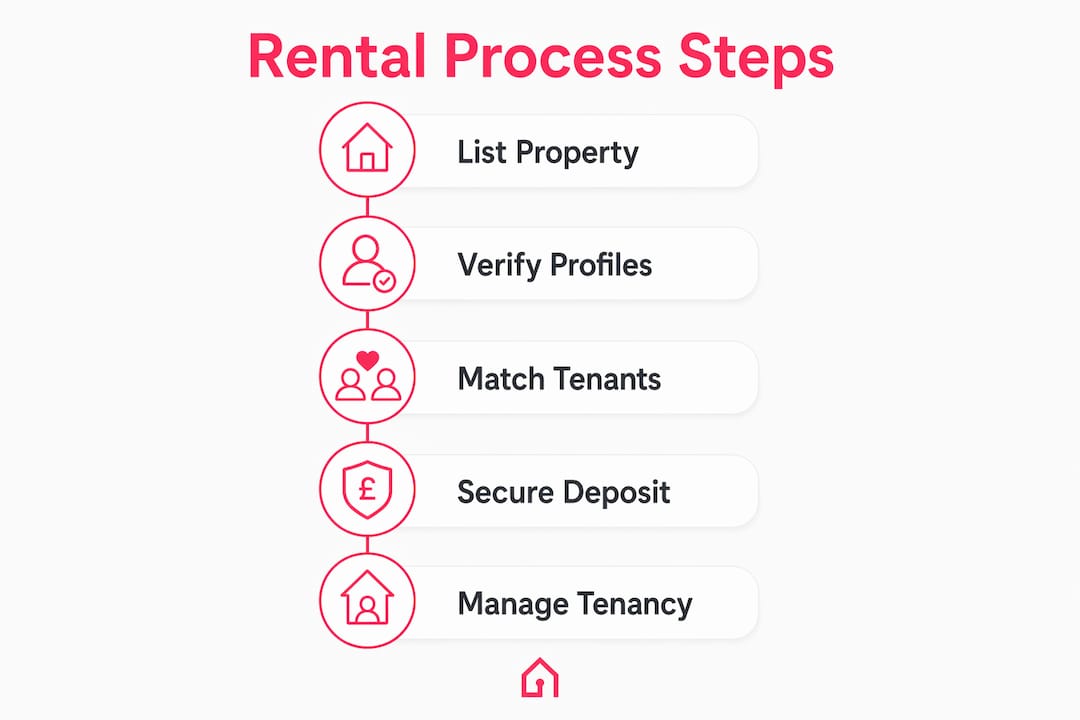
A rental marketplace is a two-sided platform that connects verified landlords and tenants, then handles the full tenancy lifecycle: listings, vetting, agreements, deposits, rent collection, and ongoing tenancy management. Unlike a simple listings portal, it transacts on both sides of the relationship.
Here is what a reputable rental marketplace typically handles:
Listings and search — published properties with filters, photos, and accurate descriptions
Identity verification — confirmed profiles for both tenants and landlords before any serious conversation begins
Secure document upload — references, income proof, and ID shared with consent, not through chat
Tenancy agreements and deposit registration — legally compliant documentation and deposit protection
Rent collection and reconciliation — often via Open Banking for instant, fee-free settlement
Tenancy management — visit scheduling, chat, notifications, and end-of-tenancy workflows
GDPR-compliant data handling — clear privacy notices and consent logging throughout
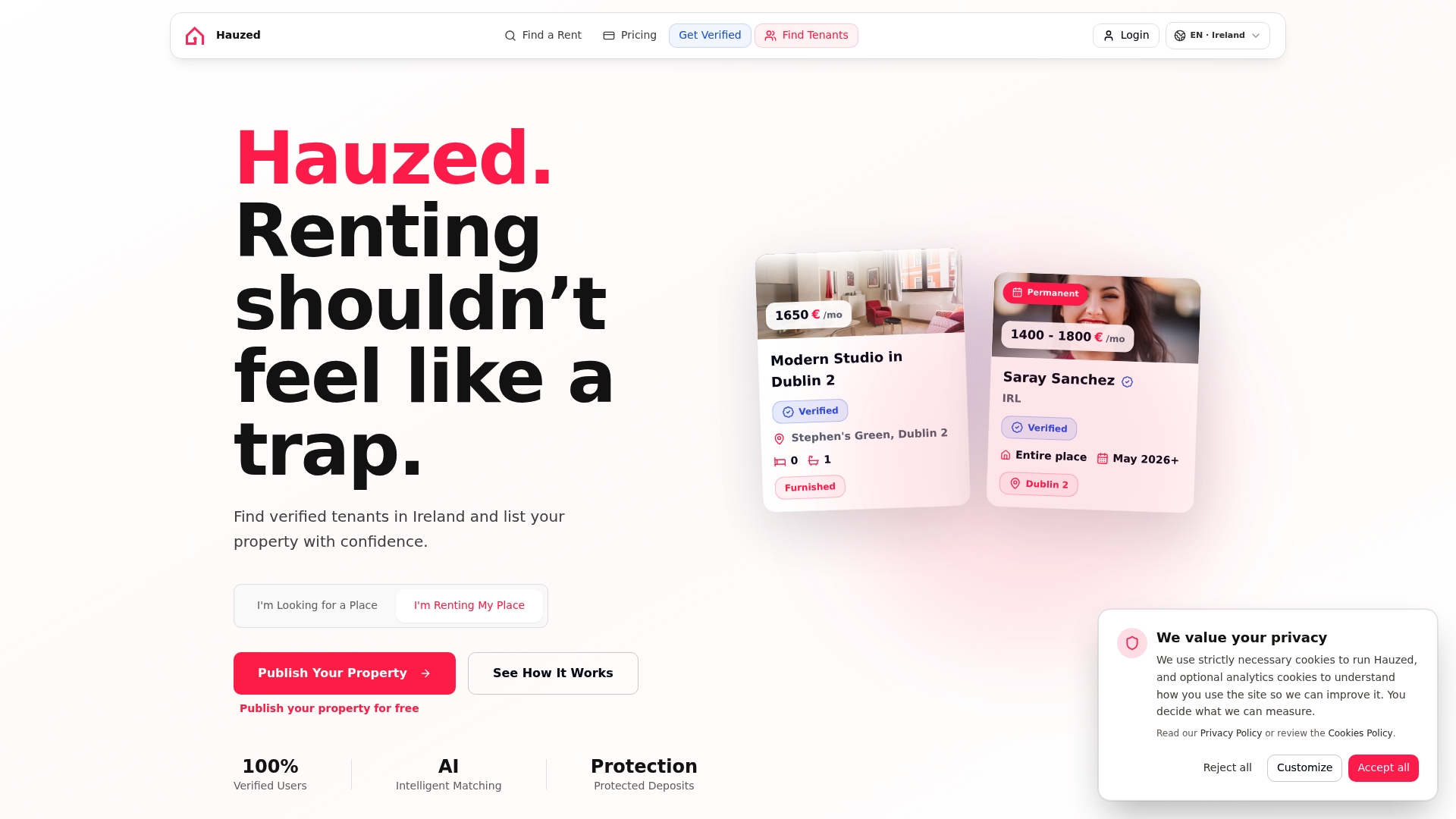
Platforms like Hauzed are built on exactly this model: verified participation, AI-assisted matching, and a structured workflow that replaces the chaos of Facebook groups and WhatsApp threads.
#best rental platforms real estate agencies#rental marketplace benefits for agencies#rental marketplace solutions agency comparison#what is a rental marketplace for agencies#role of rental marketplace landlords#how rental marketplaces work agencies#what is a rental marketplace#how rental marketplaces work#types of rental platforms#rental marketplace examples#benefits of rental marketplaces#what to know about rental marketplaces
How does a rental marketplace work from listing to end of tenancy?
The tenancy lifecycle on a marketplace typically runs one to three years, with monthly rent events and a deposit return at the end. Each stage has a clear platform role.
Listing — the landlord or agent publishes the property with photos, description, and rental terms. The platform validates the listing before it goes live.
Tenant discovery — tenants search, save listings, and send requests. AI matching tools can surface suitable candidates the landlord may not have spotted yet.
Vetting — the platform runs identity checks, collects references, and may run affordability assessments. Both sides see verified profiles before committing to a viewing.
Viewing and offer — visits are scheduled inside the platform, creating an audit trail for all communications and confirmed appointments.
Agreement and deposit — tenancy documents are generated and served digitally. The deposit is registered with a protection scheme before the tenant moves in.
Rent collection — monthly payments are collected, reconciled, and recorded automatically. Open Banking makes this instant and traceable.
Tenancy management — maintenance requests, renewal conversations, and inspection records stay in one place.
End of tenancy — the platform supports deposit return workflows and tenancy closure, reducing disputes.
Pro Tip:Complete your identity verification before you start searching or listing. Verified profiles move faster at every stage because neither side has to pause and ask "is this person real?"
What do tenants get from using a rental marketplace?
Online property marketplaces give tenants wider inventory, faster searches, and transparent information that older search methods simply cannot match. The safety benefits go further still.
Verified landlords — you know the person on the other side has been checked, reducing the risk of fake listings and scam deposits.
A stronger rental profile — instead of being one anonymous message in a crowded inbox, you have a visible, verified profile with references and preferences already attached.
Secure document upload — income proof and ID are shared through a protected flow with your consent, not pasted into a chat window.
AI-assisted matching — the platform can suggest properties that fit your criteria and alert you when something relevant is listed, saving hours of manual searching.
Structured viewings — visit requests and confirmations are logged, so you have a record if anything goes wrong.
Group applications — multiple verified people can coordinate as one household, rather than sending scattered individual messages.
AI matching speeds up the search, but it works best as a starting point. A suggested property still needs your own judgement before you commit to a viewing.
Pro Tip:Fill in every section of your tenant profile, including rental preferences and a short personal introduction. Landlords reviewing verified profiles respond faster to complete ones.
What do landlords and agencies gain from a rental marketplace?
The core benefit is straightforward: better-qualified tenant interest with far less manual filtering. Verified profiles mean you spend time on serious candidates, not on sorting through dozens of low-quality messages.
Key advantages for landlords include:
Wider reach — listings visible to a broader pool of tenants than a local "To Let" board or a single portal
AI tenant matching — tools like Hauzer identify suitable candidates from the tenant directory and prepare invitations, reducing the time a property sits empty
Automated follow-up — Echo handles chat replies and follow-up messages so you are not tied to your phone
Leasing conversations — Lia supports conversion-focused exchanges and WhatsApp-style workflows where available
Audit trail — every chat, request, and visit is logged, which matters if a dispute arises later
No personal number exposure — all communication stays inside the platform
For agencies, the rental marketplace model adds further value. Bulk publishing from CSV or Excel files, team accounts, shared portfolio workflows, and Social Booster for property promotion mean a larger portfolio can be managed without rebuilding processes property by property. You can manage multiple rental properties from one dashboard rather than juggling spreadsheets and separate inboxes.
Pricing models vary. Fixed-fee tenant-find suits landlords who want help sourcing a tenant but prefer to self-manage afterwards. Subscription tiers add ongoing management tools, AI usage, and priority support. Higher tiers typically bundle portal advertising, tenancy creation, and deposit registration as included features rather than paid add-ons.
What trust and privacy checks should you look for on a rental marketplace?
Reputable platforms display their credentials, privacy notices, and deposit-protection mechanisms clearly. Before you sign up or list, check for these signals:
Identity verification — both landlords and tenants should be verified before transacting
Secure document upload with consent logging — never share ID or payslips through an open chat
Clear GDPR and privacy statement — the platform should state what data it holds, why, and for how long
Audit trail — all chats, requests, and viewing confirmations should be recorded and accessible
Deposit protection statement — the platform should name the custodial or insured scheme it uses
Transparent pricing — no hidden fees or vague "contact us for pricing" for standard features
Fraud detection mechanisms — look for information on how the platform handles suspicious listings
For more detail on what deposit protection actually covers, the Hauzed guide on deposit protection for renters is a practical starting point.
Red flags to watch for: requests to pay a deposit or send ID outside the platform, listings with no verifiable landlord profile, missing or vague privacy notices, and no named deposit-protection scheme.
How do payments work, including Open Banking?
Open Banking enables instant, bank-to-bank rent payments initiated via secure APIs. There are no card interchange fees, no chargeback risk, and settlement is immediate, which improves landlord cash flow and makes reconciliation straightforward.
Here is how the main payment methods compare:
Open Banking — instant settlement, zero transaction fees, automatic reconciliation, no chargebacks
Direct debit — reliable but slower to settle; can fail if a tenant's account has insufficient funds on collection day
Card payment — convenient for tenants but carries interchange fees and chargeback exposure for landlords
Open Banking was mandated by the CMA in 2018, and its use for rent collection has gained significant traction since. Marketplaces that integrate it give landlords a cleaner payment record and reduce the manual work of chasing late rent.
Deposits follow a separate path. They must be registered with a government-approved protection scheme within 30 days of receipt in the UK. Custodial schemes hold the money independently; insured schemes let the landlord hold the funds but pay a premium for protection. The deposit return process has its own timeline and dispute rules, which the platform should document clearly.
Pro Tip:As a landlord, choose a marketplace that records every rent payment automatically. A clean payment history is your first line of evidence if a deposit dispute arises at the end of the tenancy.
When should you use a rental marketplace rather than a letting agent?
A rental marketplace suits you best when you want direct control, verified leads, and a structured workflow without paying a percentage of your rent to a third party. Online letting agents offer either a fixed tenant-find fee or a monthly managed service, while high-street agents charge a percentage but provide white-glove local services.
Use this checklist to decide:
Choose a rental marketplace if you want to manage the tenancy yourself, value verified profiles, and prefer a fixed plan cost over a percentage fee
Choose an online letting agent (tenant-find) if you want help sourcing and referencing a tenant but are comfortable handling the tenancy independently afterwards
Choose an online letting agent (managed) if you want ongoing rent collection and maintenance coordination without a local office
Choose a high-street agent if you need local knowledge, in-person inspections, and a fully managed service and are willing to pay a percentage for it
A hybrid approach often works well: use a marketplace to source and vet tenants, then engage a local contractor or inspector for physical property checks. You get the reach and verification of the platform with the close local care that no app fully replaces.
What should you prepare before applying or listing?
Getting your documents ready before you start saves days of back-and-forth.
Tenant checklist:
Government-issued photo ID (passport or driving licence) for identity verification
Proof of income — payslips, employment contract, or accountant's letter for the self-employed
References from a previous landlord and/or employer
Deposit funds confirmed and accessible
Completed tenant profile, including rental preferences and a brief introduction
Landlord checklist:
Proof of ownership or written agency authority
Gas safety certificate and electrical installation condition report (EICR)
Energy Performance Certificate (EPC)
Chosen deposit protection scheme confirmed
Clear photos and an accurate, complete property description
Expected timelines: identity verification typically completes within one working day on modern platforms. Referencing takes two to five working days depending on employer and previous landlord response times. From verified application to contract signing, allow five to ten working days for a straightforward tenancy.
What are the real limitations of rental marketplaces?
Marketplaces reduce friction, but they do not remove landlord responsibilities or local legal obligations. A platform cannot inspect a property, enforce a court order, or guarantee that a verified tenant will pay on time.
Common risks to keep in mind:
Incomplete vetting — verification confirms identity, not financial solvency or past behaviour
Fraud attempts outside the platform — scammers sometimes try to move conversations to WhatsApp or email to request payments. Never send money or ID outside the platform's secure flow
Inconsistent deposit handling — not every platform registers deposits correctly or on time; always confirm the scheme name and registration reference yourself
Over-reliance on AI decisions — AI matching and automated follow-up are useful assistants, but they must remain subject to human review to meet compliance and fairness expectations
Platform dependency — if a marketplace closes or changes its terms, your tenancy records and communications need to be exportable
If you suspect a scam, stop all communication immediately, report the listing to the platform, and do not transfer any funds. Check that the deposit protection scheme reference is valid directly with the scheme provider, not through the platform alone.
Key takeaways
A rental marketplace is most valuable when both sides are verified, the workflow is structured, and payments are traceable — that combination is what separates a genuine marketplace from a listings portal.
Point
Details
Core definition
A rental marketplace is a two-sided platform handling listings, vetting, agreements, payments, and tenancy management.
Trust signals matter
Check for identity verification, GDPR notices, deposit-protection statements, and an audit trail before signing up.
Open Banking advantage
Bank-to-bank rent payments via Open Banking offer instant settlement and zero transaction fees.
Know the limits
Verification confirms identity, not financial solvency; human review remains necessary for AI-assisted decisions.
Hauzed
Hauzed connects verified tenants and landlords in Ireland with AI matching, secure document upload, and structured rental workflows.
Why trust-first marketplaces are changing renting for the better
The rental market has a trust problem, and it predates any technology. Tenants send dozens of messages into silence; landlords wade through unverified enquiries; both sides share sensitive information over channels with no audit trail and no recourse. A marketplace built around verification and structured workflows does not just make renting more convenient. It changes the power balance: tenants arrive as credible candidates rather than anonymous messages, and landlords can make faster, better-informed decisions without exposing their personal contact details.
What gets overlooked in most discussions about proptech is that the technology is secondary. The real shift is behavioural: when both sides know the other has been verified, the quality of every interaction improves. AI agents like Hauzer and Echo are useful precisely because they operate on top of that verified foundation. Without it, automation just accelerates noise.
The platforms that will matter long-term are those that treat compliance, deposit protection, and GDPR not as legal boxes to tick but as core product features. That is the standard worth holding any marketplace to.
Hauzed: a safer way to rent and let in Ireland
Renting in Ireland should not mean choosing between a scam-prone Facebook group and an expensive full-service agency. Hauzed is built as a trust-first rental marketplace for Ireland, starting with Dublin, where verified profiles, AI-assisted matching, and structured workflows replace the message chaos that wastes everyone's time.
For tenants, Hauzed is free to use. You can search listings, verify your identity, build a complete rental profile, upload supporting documents securely, and coordinate viewings, all without sharing your details through an open chat. For landlords and agencies, Hauzed offers plan-based access with AI tools (Hauzer for matching, Echo for follow-up, Lia for leasing conversations), bulk publishing for larger portfolios, and team accounts for agencies managing multiple properties.
Start searching verified rentals on Hauzed, or list your property and let the platform bring qualified, verified tenant interest to you.
Useful sources
How to Build a Property Rental Marketplace — LOW/CODE: covers the full transaction lifecycle, compliance requirements, and platform architecture for rental marketplaces.
The Benefits of Using an Online Property Marketplace for Renting — AxiomQ: explains tenant and landlord benefits of centralised, digital property search.
Open Banking for Rent Collection: The Future for UK Landlords — Latch: details how Open Banking works for rent collection, settlement speed, and reconciliation.
Online vs High Street Agents — AgentCheck: compares online letting agent models (tenant-find vs managed) with high-street alternatives.
Rental proptech platforms — SAGE Journals: academic analysis of how rental proptech platforms are reshaping landlord and tenant power relations in the UK private rental sector.
FAQ
What is a rental marketplace in simple terms?
A rental marketplace is a two-sided platform that connects verified landlords and tenants and manages the full tenancy process, from listing and vetting through to rent collection and end-of-tenancy workflows, rather than simply displaying property adverts.
How is a rental marketplace different from a listings portal?
A listings portal shows properties; a rental marketplace transacts on both sides, handling deposit protection, tenancy agreements, rent collection, and ongoing management across the tenancy term.
Is Open Banking safe for paying rent?
Yes. Open Banking payments are bank-to-bank transfers initiated via regulated, secure APIs. They carry no card fees, no chargeback risk, and provide instant settlement with an automatic payment record.
What documents do tenants need to apply on a rental marketplace?
You typically need a government-issued photo ID for verification, proof of income, at least one reference, and confirmation that your deposit funds are available.
How does Hauzed help landlords reduce manual work?
Hauzed gives landlords AI agents (Hauzer for tenant matching, Echo for chat follow-up, and Lia for leasing conversations), structured visit scheduling, and a single dashboard for managing properties, requests, and communications, reducing the need to handle every enquiry manually.